
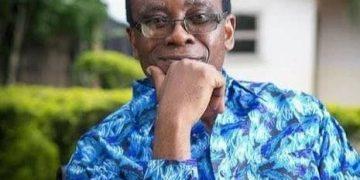




























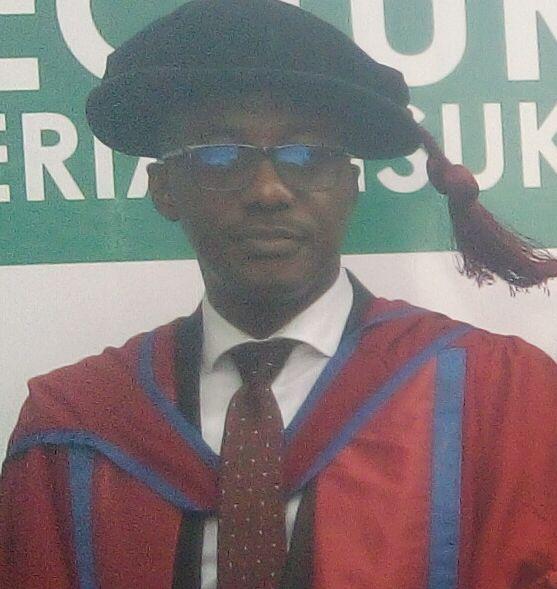
Professor Chima Onoka
A University Don, Professor Chima Onoka, says that the pursuit of Universal Health Coverage (UHC) in Nigeria is both a morale imperative and practical necessity for sustainable development.
Professor Onoka said this while delivering the 241 Inaugural Lecture of the University of Nigeria (UNN), with the topic: “Bridging the Divide: the Pracademic’s Mandate in the Quest for Universal Heath Coverage.”
Onoka, who is a Professor of Public Health and Health Systems Economics, said that achieving UHC required balancing equity, efficiency, and financial protection while addressing the economic burden of disease on households.
He said: “Achieving UHC is not simply about expanding access to services, but about ensuring quality, affordability, and resilience in health systems.
“Collaboration across academia, policy, and practice, is essential to bridge gaps between theory and implementation.”
The Pracademic added that by integrating evidence from research with the lived realities of communities, policymakers can design interventions that are both contextually relevant and scalable.
He said that UHC was a long-term commitment that demanded political will, innovative financing, and inclusive partnerships.
“It is not a destination reached overnight, but a continuous process of reform and adaptation.
“Progress toward UHC strengthens social cohesion, reduces poverty, and builds healthier, more productive societies, ” he said.
Professor Onoka stated further that Universal Health Coverage was the global health goal centred on the principle that everyone, everywhere, should have access to the full range of preventive, curative, and rehabilitative health services they need, whenever they need them, without facing financial hardship.
He said that the UHC was beyond health insurance, explaining that fundamentally, it represents a shift in how a society values the life of every citizen, “from the President’s child in Aso villa to the sachet water seller on the street.”
The don, however, observed that financial hardship had slowed down the progress of achieving the Universal Health Coverage.
According to him, services are unaffordable to many.
“Currently, approximately 2.1 billion people (roughly 26% of the global population) face financial hardship due to out-of-pocket health spending, ” he said.
He commended the National Health Insurance Authority (NHIA) for introducing some innovations that have improved UHC in Nigeria in the past two years.
He said that the NHIA had been better in the past two years, especially with the introduction of Basic Health Care Provision Fund (BHCPF).
He described the innovation by the management of the NHIA, as the best organised and social protection items to give to Nigerians.
He said: “For now, a Basic Health Care Provision Fund card is the most effective and trackable social safety health-care access that Nigeria can offer to the vulnerable.
“This is what happens when UHC works. A BHCPF card is a better value for money than sharing rice and beans to untraceable people.”
According to him, achieving UHC in Nigeria is not a destination “we will reach by chance; it is a structure we build by choice.”
“Every Nigerian deserves a health system that protects them, ” Onoka said.
In his remarks, Professor Jesophat Onwumere, Deputy Vice Chancellor, University of Nigeria, Enugu Campus, described the 241 inaugural lecturer as an excellent scholar.
Professor Onwumere, who represented the Vice Chancellor of UNN, Professor Simon Ortuanya, lauded the pracademic’s efforts in putting together the lecture.