


















From zero to net exporter: How Nigeria, NLNG are reshaping global gas supply
By Desmond Ejibas, News Agency of Nigeria (NAN)
Nigeria is leveraging artificial intelligence, methane abatement, workforce development, third-party gas sourcing, and massive investments to reposition itself as a global gas powerhouse reshaping supply chains.
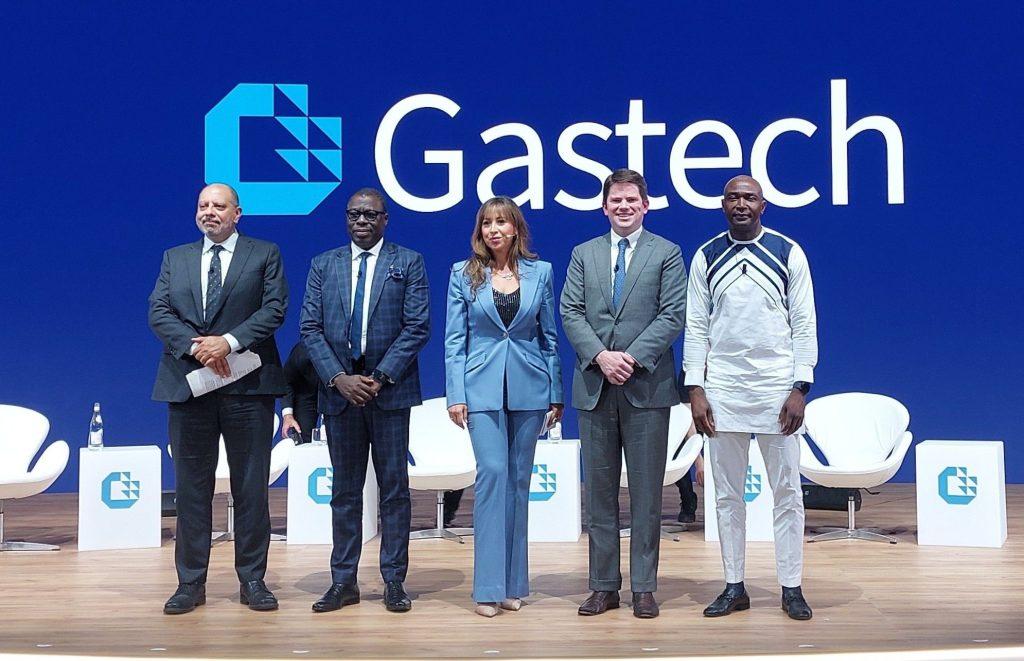
Nigeria Liquefied Natural Gas Limited (NLNG) presented its robust new initiatives at the just-concluded Gastech Exhibition and Conference in Milan, Italy, which drew more than 50,000 participants from 150 countries.
At the event, NLNG and Nigerian National Petroleum Company Limited (NNPCL) unveiled sweeping reforms, bold strategies, investments, and ambitions plans aimed at sustaining Nigeria’s status as a net exporter of natural gas.
NLNG announced the integration of Artificial Intelligence (AI) into its operations, positioning the company as a frontrunner in smart energy and marking a significant digital leap for Africa’s energy future.
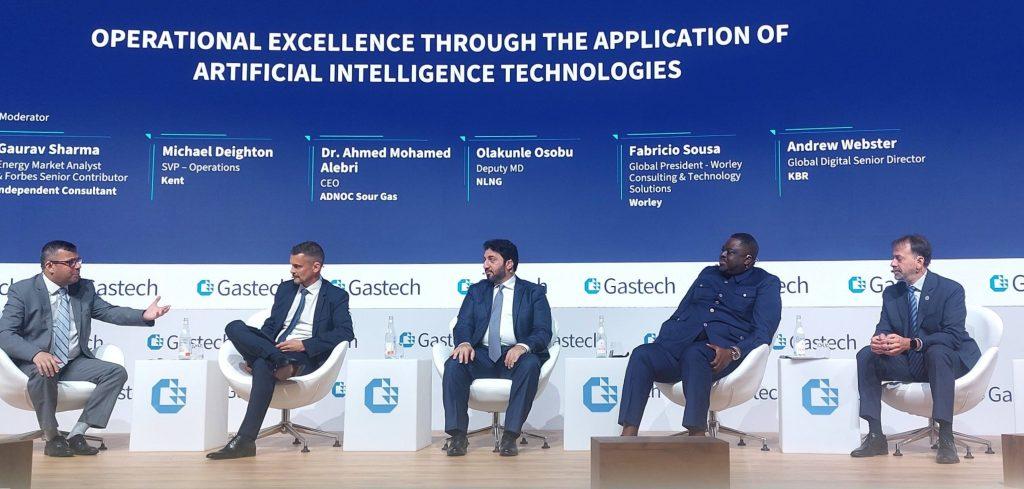
Mr Olakunle Osobu, Deputy Managing Director of NLNG, told a panel session that AI was now central to operational excellence, safety, and productivity across the company’s infrastructure.
“With over 10,000 operators and technicians working simultaneously towards a common goal, the use of AI is not only imperative but compulsory,” Osobu said.
He said that AI had been embedded into every aspect of NLNG operations, from safety protocols to equipment performance, making the company more efficient, agile, and productive.
“Our standard is to improve everything we do, every day,” he added.
Highlighting workforce training breakthroughs, Osobu disclosed that AI-driven tools had cut operator training time from up to 12 months to just two or three months, improving productivity and reducing costs.
He added that AI now optimises equipment management, enabling machines to function faster while generating actionable insights that simplify complex decisions, a shift he described as “smart work over hard work.”
He stressed, however, that the company’s technology team regularly reviewed deployments to ensure cost-effectiveness and demand-driven application.
Meanwhile, Dr Philip Mshelbila, Managing Director of NLNG, called for global cooperation to tackle methane emissions and accelerate climate action.
Speaking at another panel, Mshelbila described methane as over 80 times more potent than carbon dioxide, with a 12-year atmospheric lifespan, making its reduction a fast-track climate solution.
He said fossil fuel emissions arose from coal mining, flaring, venting, fugitive releases, and incomplete combustion, all requiring targeted mitigation strategies.
Mshelbila identified prevention, detection and measurement, and intervention as the three pillars for combating methane emissions across the energy sector.
He explained that prevention required designing facilities to minimise leaks, detection relied on advanced monitoring, while intervention focused on reintegrating otherwise wasted gas into systems.
“NLNG has reduced Nigeria’s gas flaring by more than 40 per cent since inception 26 years ago. Methane is energy, provided it is kept in-pipe.
“We have invested in detection, measurement, monitoring, and reporting systems to manage methane emissions,” he stated.
Mshelbila said NLNG had joined the Oil and Gas Methane Partnership and was working towards Gold Standard certification, with a new boil-off gas compressor set for inauguration.
He announced that the company would soon inaugurate a boil-off gas compressor to reintegrate methane that would otherwise be flared.
According to him, inclusive frameworks, access to finance, and technology-sharing are crucial for smaller operators to adopt advanced methane abatement systems.
On supply, Mr Nnamdi Anowi, NLNG’s General Manager of Production, announced that the company was shifting towards third-party gas sourcing following International Oil Companies’ divestments.
“Today, 75 per cent of our feed gas comes from third-party suppliers. By October, we expect our second tranche, ensuring adequate supply into 2026 and 2027,” he said.
Anowi highlighted Africa’s energy poverty, with 60 per cent of the population lacking access, stressing that affordable gas could transform the continent into a global manufacturing hub.
“What happened in Nigeria when power availability improved can happen across Africa. With energy, industries thrive, jobs are created, and production shifts to the continent,” he said.
He described Nigeria as a ‘gas-rice nation with largely untapped offshore reserves,’ stressing the importance of infrastructure and investment to unlock them.
“The Federal Government has rolled out incentives for offshore gas exploration and production. This is where LNG plays a critical role, delivering energy to the parts of Africa that need it most,” Anowi said.
He confirmed NLNG’s six-train capacity of 22 million tonnes per annum, with Train 7 under construction to expand output by 30 per cent, despite utilisation averaging 60 per cent in recent years.
Anowi reaffirmed NLNG’s commitment to combating energy poverty and spurring industrial growth in Africa.
Also speaking, Mr Jude Ohanyere, Senior Mechanical Engineer for Static Equipment at NLNG, said the company was carrying out a life-extension assessment for critical assets such as the Main Cryogenic Heat Exchanger (MCHE).
“We’ve partnered with Honeywell, the OEM, to ensure that the MCHE can operate safely and reliably for the next 10 to 25 years.
“Reliable assets mean fewer outages and stronger supply commitments,” he said.
Ohanyere, who presented a technical paper on LNG Operations, added that NLNG’s reliability also benefits upstream partners by reducing gas flaring and improving the country’s energy mix.
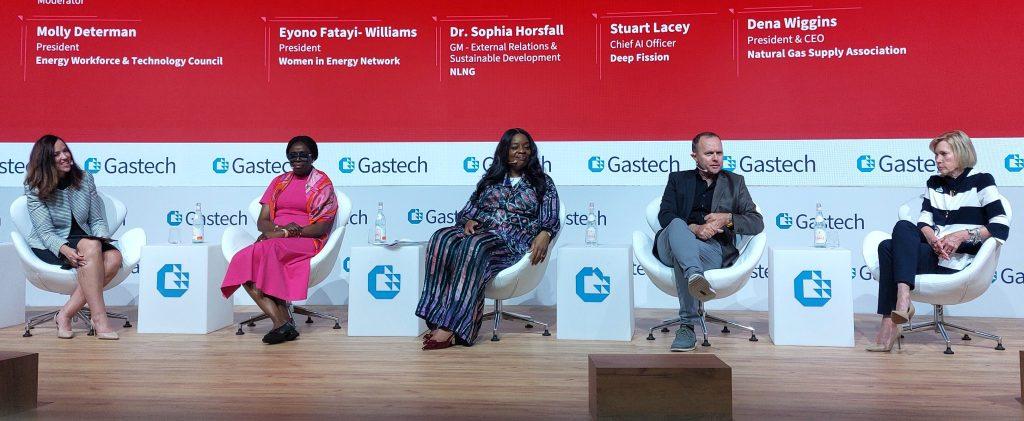
Dr Sophia Horsfall, NLNG’s General Manager, External Relations and Sustainable Development, addressed workforce development, citing global projections of 14 million new energy jobs by 2030 and a 60 per cent reskilling need.
She said NLNG’s graduate trainee and professional programmes were designed to bridge digital, renewable, and sustainability skill gaps while embedding purpose, creativity, and hybrid work flexibility.
Horsfall explained that trainees underwent structured mentorship, rotations, buddy systems, overseas placements, and innovation-driven initiatives such as hackathons and coding clubs.
“NLNG’s attrition rate remains lower than industry averages. Our young professionals are motivated and engaged because we deliver on our promises,” she said.
She added that the company had embedded climate priorities into job descriptions while building ESG leadership capacity from staff to board level.
At the opening plenary, Mr Bayo Ojulari, Group Chief Executive Officer of the Nigerian National Petroleum Company Limited (NNPC Ltd.), said Nigeria was targeting 60 billion dollars in fresh investments.
He said the plan was to raise natural gas production to 12 billion cubic feet per day, and crude oil output from 1.6 million barrels to three million barrels daily by 2030.
Ojulari highlighted major projects including the Ajaokuta-Kaduna-Kano pipeline, the Nigeria-Morocco Gas Pipeline, and NLNG expansion projects covering Train 7 and future Trains 8 and 9.
He said Nigeria already supplied 60 per cent of LNG to Portugal and Spain, while driving LPG adoption and a Compressed Natural Gas transition scheme for vehicles and machinery.
“Geopolitical shifts such as the Russia-Ukraine war have accelerated regional pipeline projects to strengthen energy security. Nigeria is ready to play a central role,” Ojulari said.
He noted that the Petroleum Industry Act of 2021 had transformed NNPC into a limited liability company, enabling global partnerships and direct funding.
Also speaking, the Minister of State for Petroleum Resources (Gas), Mr Ekperikpe Ekpo, reaffirmed Nigeria’s commitment to using its 210 trillion cubic feet of gas reserves to drive industrialisation.
Ekpo said Train 7 would boost NLNG’s output to 30 million tonnes annually, while Nigeria pursued regional pipelines with Morocco, Algeria, and Equatorial Guinea to expand connectivity.
“Our natural gas is the bridge to renewables, and the anchor for developing countries like Nigeria to avoid being left behind in the global energy transition,” he said.
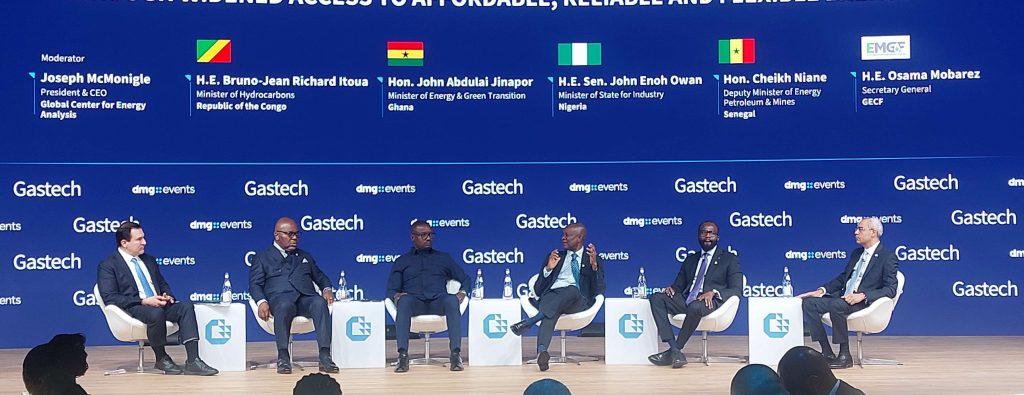
Sen. John Owan, Minister of State for Industry, said Nigeria’s new strategic framework targeted raising industry’s share of GDP from 10 per cent to 25 per cent by 2035.
He said the framework, validated under President Bola Tinubu, marked a turning point, shifting Nigeria from a resource-based to a productive and innovative economy.
Owan highlighted Tinubu’s reforms, including petrol subsidy removal and exchange rate unification, which had stabilised markets and attracted new investment interest.
“Nigeria is more of a gas-based country than an oil country. Our energy policy is grounded in resources and long-term development goals,” he said.
Mr Olalekan Ogunleye, NNPC’s Executive Vice President, said the company was revising Nigeria’s gas master plan to position the country as a sustainable global supplier.
He cited the Atlantic Gas Pipeline with Morocco to connect 16 African economies, while also supporting gas-based industries to generate jobs and attract investors.
“This is the best time to invest in Nigeria. Opportunities are vast, and the environment is ready,” Ogunleye said.
Nigeria’s participation at Gastech 2025 underscored its ambition to emerge as a leading global energy hub, transforming gas into the anchor of industrial growth and regional integration. (NANFeatures)