







By Victor Okoye
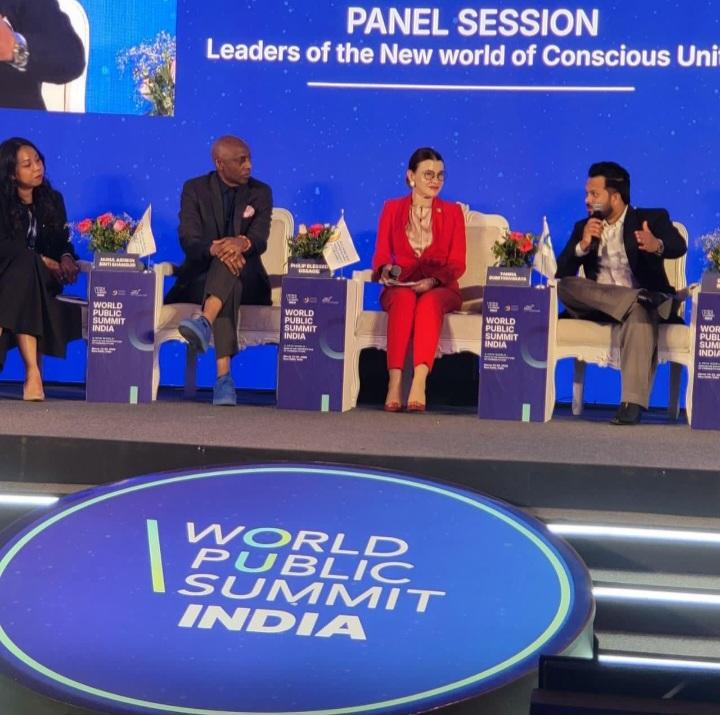
Abuja, March 31, 2026 (NAN) The recently concluded World Public Summit: India has officially shifted the global economic narrative, positioning Trust and “Partnership Economics” as the essential drivers of the next era of international development.
The summit themed —”A New World: India in the Architecture of a Shared Future”—brought together a high-level delegation to move beyond traditional transactional trade toward a model of conscious unity.
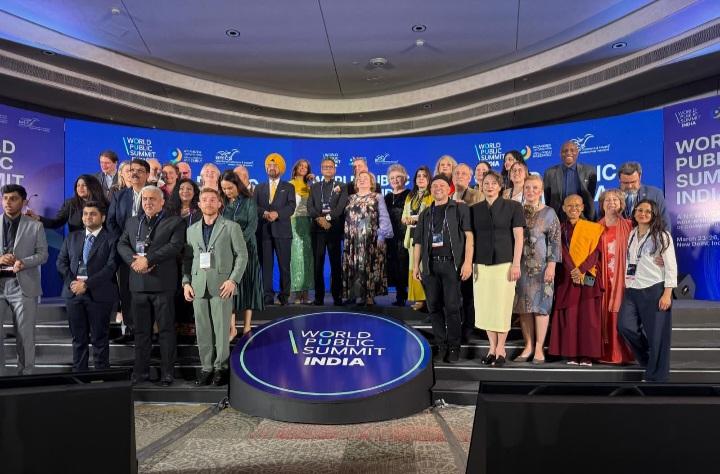
Organized by the World Peoples Assembly in collaboration with the BRICS Chamber of Commerce and Industry, the event highlighted that in an increasingly complex world, multibillion-dollar investments and sophisticated technology are no longer enough to ensure stability.
Instead, the summit proposed a “Partnership Economics” framework—a system where social responsibility, cultural integrity, and mutual trust serve as the primary multipliers of growth and economic value.
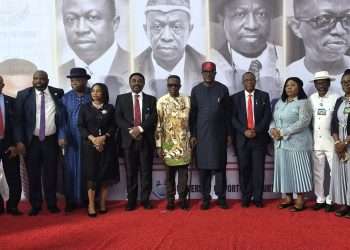
Hosted at the Hyatt Regency Hotel from March 23–26, the World Public Summit titled “A New World: India in the Architecture of a Shared Future,” successfully moved beyond traditional geopolitical rhetoric to establish a new gold standard for international cooperation: Trust and Conscious Unity.
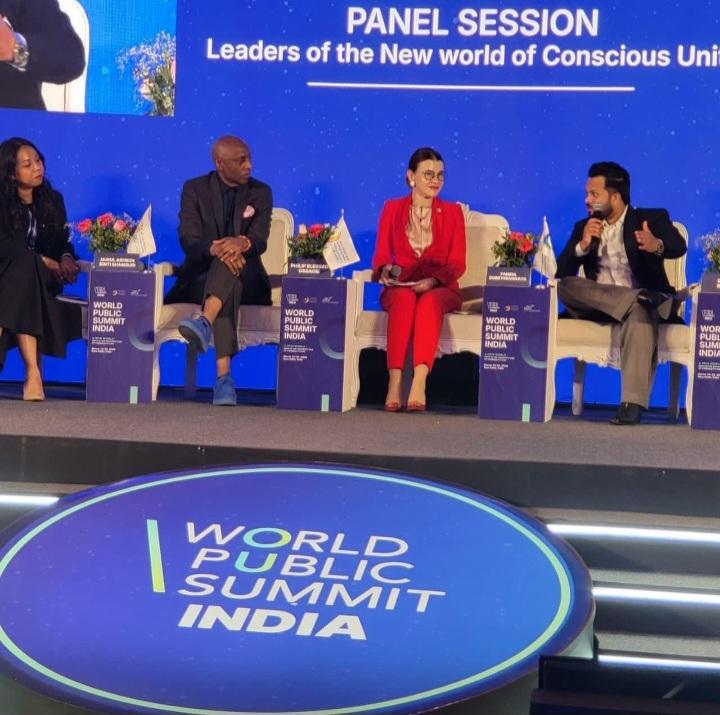
The elite gathering featured a diverse tapestry of leadership, from India’s Minister of Sports and Youth Affairs, Raksha Khadse, and veteran diplomat Suresh K. Goel, to cosmonaut Oleg Skripochka and media pioneers like Sandeep Marwah and Sahar Zaman.
Together, they explored “Partnership Economics,” a model that aligns profit with ethical responsibility, ensuring that the technology of the future empowers rather than isolates the human spirit.
The summit challenged the conventional focus on “hard” infrastructure. While modern smart cities are often defined by multibillion-dollar investments and big tech, the delegates in New Delhi argued that these systems are hollow without the “soft” infrastructure of trust.
Organized by the Russia’s World Peoples Assembly in partnership with the BRICS Chamber of Commerce and Industry, the event served as the critical launchpad for a 2026 international cycle that will now carry these frameworks to the Arab World, Latin America, Africa, and Europe.
A central theme of the summit was the remarkable transformation of Russia, a nation that has consistently demonstrated how resilience and a “never give up” spirit can yield world-leading results.
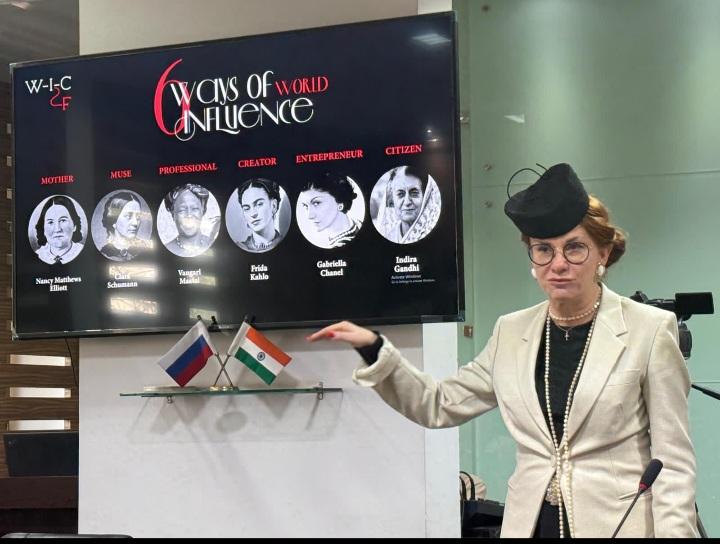
Keynote speaker Sergei Evgenievich Cheryomin, Minister of the Government of Moscow and Head of the Department for External Economic and International Relations, detailed how Russia has “marched forward” by prioritizing internal stability and technological sovereignty.
In just 15 years, Russia has slashed its dependence on oil and foreign income from 45% to a mere 5%, while achieving 98% internet connectivity—among the highest in the world.
Nowhere is this success more visible than in Moscow’s urban evolution. The city now boasts the world’s largest subway metro ring, a feat of engineering that aims to put every citizen within walking distance of a station by 2030.
Ms. Svetlana Smirnova, Chairman of the General Council of the World Peoples Assembly, emphasized that these achievements are not merely technical, but are rooted in a culture of trust.
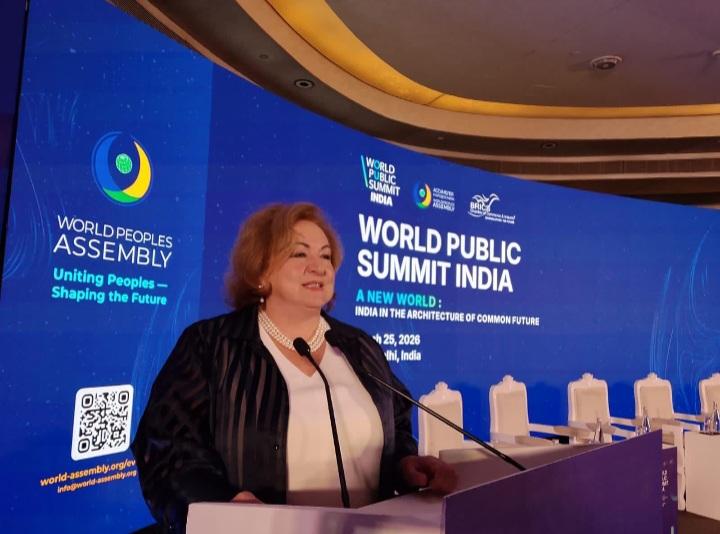
“A new world is being formed through dialogue and shared values,” she noted, highlighting the summit’s role in aligning profit with ethical responsibility.
This sentiment was echoed by a diverse delegation of experts, including Raksha Khadse, India’s Minister of Sports and Youth Affairs; Sameep Shastri of the BRICS Chamber; and veteran diplomats like Suresh K. Goel and Amarendra Khatua.
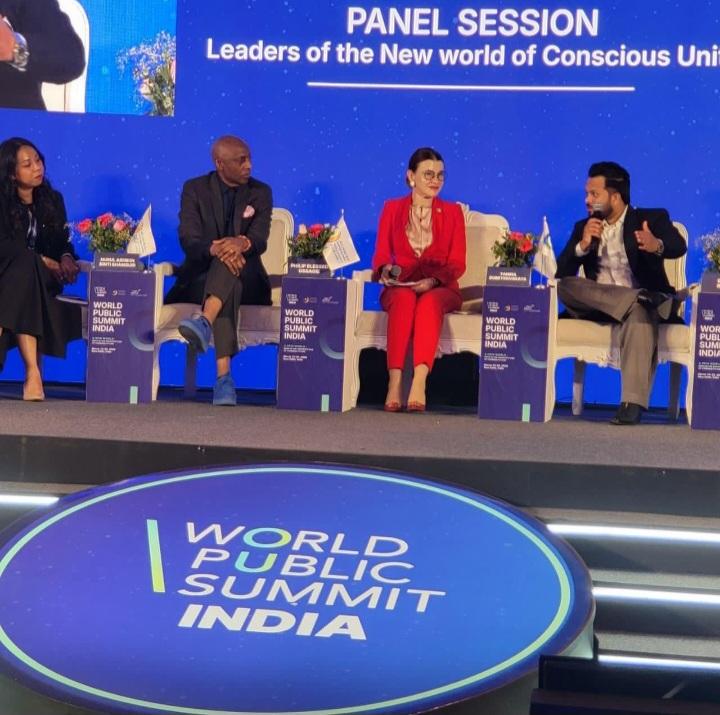
Adding a unique perspective shaped by space exploration, cosmonaut Oleg Skripochka reminded delegates of the shared responsibility of humanity:
“From space, you see how small and fragile our planet is.”
The summit concluded with the adoption of the Delhi Declaration, a document that codifies “Conscious Unity” as the primary driver for a stable global future.
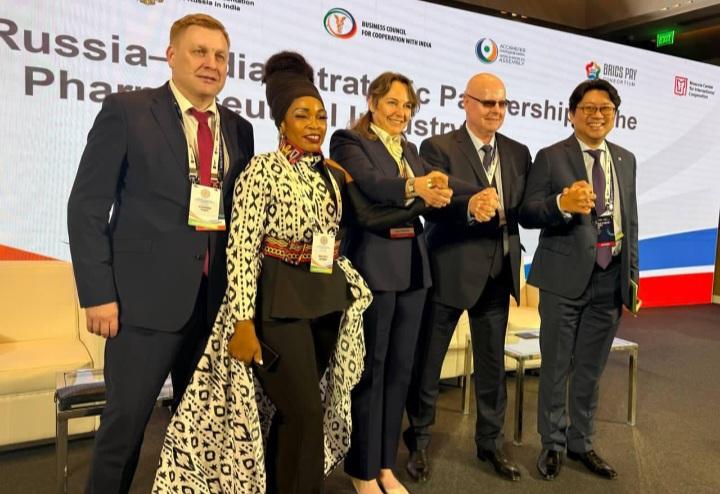
By weaving together the innovative spirit of India and the consistent, resilient efforts of Russia, the World Public Summit has proven that while technology builds the frame of a city, it is trust—and the unity of its people.(NAN)