






























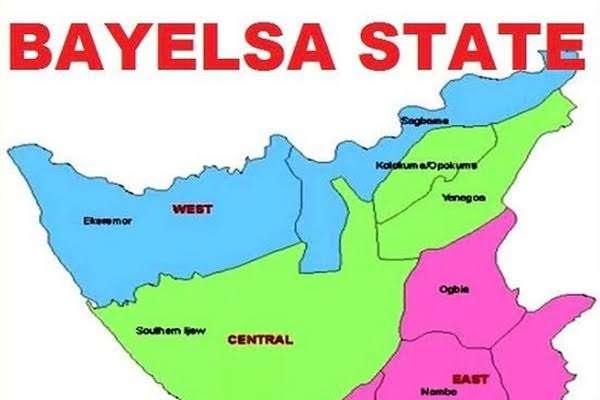
Bayelsa wage bill to rise by N3bn monthly from October – Official
The Bayelsa government says its monthly wage bill will increase by about N3 billion from October 2026 following the approval of additional allowances for civil servants and workers in tertiary institutions.
The Technical Adviser to the Governor on Treasury, Accounts and Revenue, Mr Timipre Sripulo, disclosed this on Friday during the monthly Transparency Briefing held at the Treasury Building, Yenagoa.
Sripulo said the increase would result from the implementation of peculiar allowances for public servants and special allowances for staff of tertiary institutions.
He explained that the special allowances for tertiary institution workers would add more than N900 million to the monthly wage bill, while the peculiar allowances for civil servants would increase it by about N2 billion.
A breakdown of the state’s salary payments showed that civil servants received N7.85 billion in August and N8 billion in September, while political appointees received N1.99 billion and N2 billion, respectively.
This brings the combined monthly salary payments to civil servants and political appointees to N9.84 billion in August and N10 billion in September, excluding other salary-related obligations.
Sripulo said the government had also committed to paying arrears of the tertiary institutions’ special allowances dating back to January 2026.
Presenting the state’s income and expenditure profile for August and September, he said Bayelsa received total revenue of N99.25 billion in August and N84.07 billion in September.
He said the state spent N78.73 billion on capital projects in August and N28.36 billion in September, bringing total capital expenditure for the two months to N107.09 billion.
Recurrent expenditure stood at N7.56 billion in August and N7.26 billion in September.
The technical adviser listed some of the projects that attracted substantial payments during the period to include the Nembe-Brass road, Yenagoa Airport roads, the 25,000-capacity stadium and the nine-storey State Secretariat.
Others were the Bayelsa Medical University, State House of Assembly Complex, community development projects, Yenagoa neighbourhood roads and the Faculty of Environmental Sciences at the Niger Delta University.
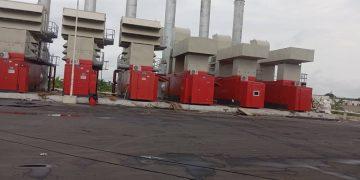
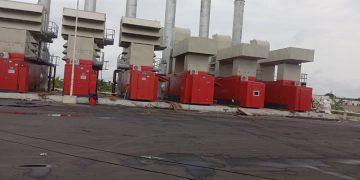
He also listed the Ekeremor market, gas turbine and solar power projects, among others.
Giving a breakdown of the revenue, Sripulo said the state received N79.21 billion as gross Federation Account Allocation Committee inflow in August.
The amount comprised N12.71 billion statutory allocation, N50.14 billion derivation revenue and N16.36 billion Value Added Tax.
After deductions of N993.03 million, the state received N78.21 billion as net FAAC revenue.
Other receipts, including internally generated revenue, infrastructure development funds, excess crude refunds and ecological fund transfers, brought total receipts for August to N99.25 billion.
For September, he said gross FAAC inflow stood at N56.64 billion, comprising N8.6 billion statutory allocation, N39.32 billion derivation revenue and N8.7 billion VAT.
After deductions of N882.49 million, the state received N55.76 billion as net FAAC revenue.
Other receipts, including N4.11 billion internally generated revenue, N7 billion infrastructure development funds, N5.12 billion from natural resources development and N3.06 billion in NNPC management fees, brought total receipts to N84.07 billion.
Sripulo said the state closed September with a balance of N59.42 billion, including the N31.33 billion carried forward from August.
He, however, disclosed that before the next FAAC allocation arrived on Oct. 19, the government had spent N18.9 billion on capital projects and N4.9 billion on recurrent obligations.
This left an available balance of N35.52 billion, with N24 billion retained in the capital projects account to support ongoing infrastructure development.
The technical adviser also highlighted a Supreme Court judgment delivered on July 17, 2026, in favour of Bayelsa over the taxation of oil fields previously classified as offshore.
He said the judgment would enable the state to collect personal income taxes from workers of oil companies operating within its territory, instead of such taxes being paid to the Federal Government.
According to him, the case involves about N5 billion in tax liabilities expected from some companies, but its wider significance is the state’s entitlement to taxes generated from economic activities within its territory.
Earlier, the Commissioner for Information, Orientation and Strategy, Mrs Ebiuwou Koku-Obiyai, said the monthly transparency briefing remained a deliberate commitment by the administration to open governance and public accountability.
She said the government had sustained its development agenda through road rehabilitation, urban renewal, flood control and environmental sanitation.
Koku-Obiyai attributed the relative protection of homes from flooding this year partly to sustained investments in flood control and environmental sanitation.
She cited the nine-storey State Secretariat, which has reached its ninth floor, and the Nembe-Brass road as examples of projects progressing according to specifications.
The commissioner said an inspection of the Nembe-Brass road by journalists, alongside the commissioners for Information and Works, confirmed that construction was progressing according to specifications.
She added that the government had sustained prompt payment of salaries and pensions while expanding youth and women empowerment programmes and skills acquisition initiatives.
Koku-Obiyai also invited Bayelsans and friends of the state to participate in the annual thanksgiving activities, which began with a solemn assembly at the Diri State Ecumenical Centre, Yenagoa.
The activities, she said, would culminate in a thanksgiving service on Monday at the Ecumenical Centre, Igbogene.
She reaffirmed the administration’s commitment to transparency, saying its books and doors remained open as it ap
proached its final year in office.