





















₦2.3trn FAAC Revenue: Dufugha seeks clarity over Bayelsa’s 88.5% poverty rate
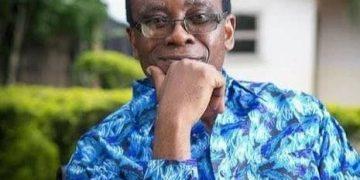
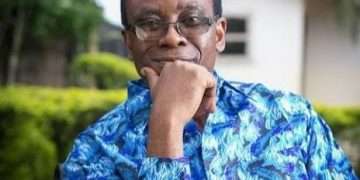
Mr Francis Dufugha, a renowned journalist and publisher of Niger Delta Herald Newspapers on Monday challenged the Bayelsa government to explain the state’s 88.5 per cent multidimensional poverty rate.
Dufugha said the figure raised serious questions about the impact of government’s revenue inflows on the lives of ordinary people of Bayelsa.
He made the call in a statement urging the administration of Gov. Douye Diri to publish its six-year financial and development scorecard.
Dufugha said Bayelsa received approximately N2.3 trillion in gross Federation Account Allocation Committee (FAAC) allocations between 2020 and 2025.
He said the state had also continued to receive substantial federal transfers and other revenues during the period.
According to him, the key question is not how much money accrued to Bayelsa, but what measurable outcomes the resources produced.
He cited the National Bureau of Statistics (NBS) Multidimensional Poverty Index, which reportedly placed Bayelsa’s poverty rate at 88.5 per cent.
He added that child multidimensional poverty in the state was reported at more than 95 per cent.
Dufugha said the index measured deprivation beyond income, including health, education, living standards and employment.
He questioned whether the state’s development priorities adequately reflected the needs of residents confronting poverty and housing challenges.
The publisher acknowledged the Diri administration’s completion of some housing estates inherited from the previous administration.
He also acknowledged the construction of residential quarters for legislators and commissioners at New Yenagoa City and New GRA.
However, Dufugha questioned the continued prioritisation of accommodation for political and senior government officials amid widespread housing affordability challenges.
He said the government should give greater attention to low-income families, young workers, teachers, healthcare workers, civil servants and first-time homeowners.
Dufugha advocated affordable housing schemes, serviced plots, rent-to-own programmes, low-interest housing finance and public-private partnerships.
He said such initiatives would provide ordinary Bayelsans with realistic opportunities to own homes.
Dufugha challenged the state government to publish a six-year financial and development scorecard covering key sectors.
He listed poverty reduction, employment, youth development, education, healthcare, housing, infrastructure, agriculture and household living standards.
He said the request was made in the spirit of the Freedom of Information Act, 2011, and Section 39(1) of the Constitution.
Dufugha said seeking information about public resources and development outcomes should not be regarded as hostility towards the administration.
According to him, such scrutiny is part of democratic accountability and responsible citizenship.
“As Bayelsa marks 30 years of statehood, we should be courageous enough to ask whether our development priorities are truly centred on the people,” he said.
Dufugha said he was not opposed to Diri or his administration, describing his intervention as that of a concerned Bayelsan and stakeholder.
He challenged the government to publish updated credible data if Bayelsa had substantially improved since the NBS poverty assessment.
“Bayelsans deserve facts, figures and measurable results—not propaganda or social-media hype,” Dufugha said.
He urged the government to plan, build and provide housing with ordinary Bayelsans as the central focus.
“I come in peace. But Bayelsans d
eserve answers,” he said.