




























Ken Onyekaonwu writes from United Kingdom.
Sit-at-home, an order by the IPOB for the residents of the five eastern states of Nigeria not to work or move around every Monday in order to press home the demand for the release of their leader, has no doubt become the new norm in the entire south eastern states of Nigeria, but with heavy observance in Enugu State. This is to the extent that civil servants and many other workers in both the formal and informal sectors in the state have now embraced Mondays for true rest as both vehicular and human movements are skeletal, with occasional attacks on defaulters by the enforcers of the order.
This is not without immeasurable attendant economic implications on the state government. Recall that in Enugu state, this comes with total grounding of economic activities, and it simply means a complete halt on the collection of Internally Generated Revenue in the state. For example, all the revenues accruing to Enugu state from the banking activities in the state, the ticketing on transporters, traders, etc, which are conducted on daily basis will not take place every Monday following the observance of the sit-at-home order.
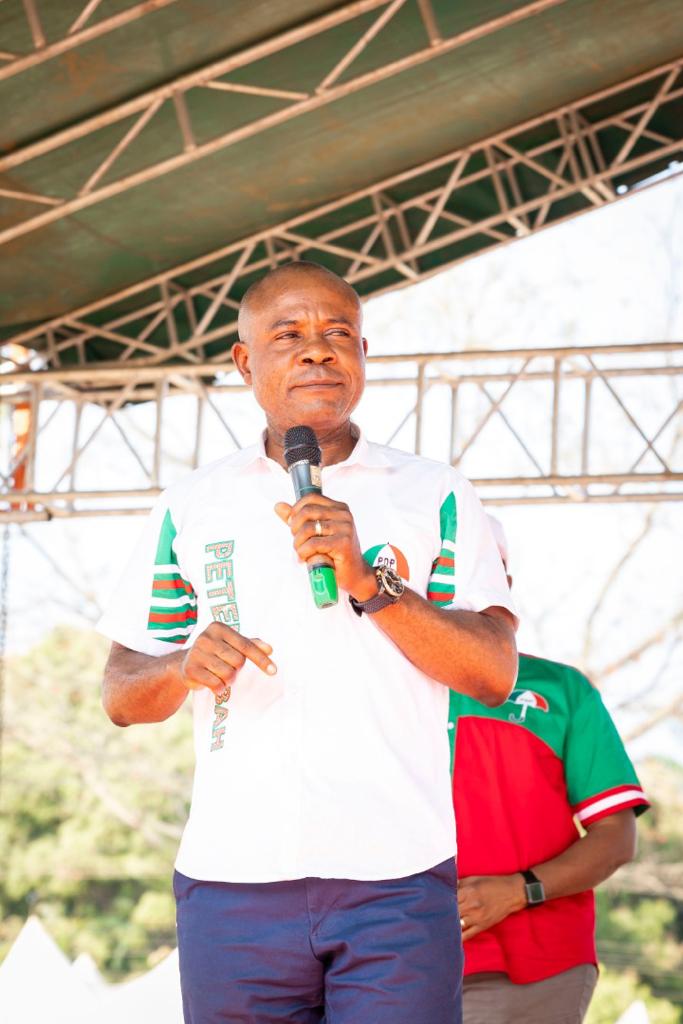
This is not an attempt to support or discredit the sit-at-home order, but to provide advice to Governor Peter Mbah on policy approach, especially on delicate issues of this nature. You may be surprised to know that it is only in Enugu State that sit-at-home still receives total observance in the entire south eastern states. A phone call away to Onitsha, Aba, Abakaliki and Owerri will confirm this much, therefore, Gov. Peter Mbah has only taken a plausible decision.
However, in consideration of the delicacy of this matter with possible implications on security of lives, there are other ways the Peter Mbah lead government would have approached the ease of observance of the sit-at-home in Enugu state than the media celebration approach the government adopted. For instance, a close analysis of how the sit-at-home observance was relaxed by the workers and traders in Onitsha would show no timeline or policy order that precipitated their action. The fact that Onitsha started losing her customers to the nearby Asaba with the possible creation of a close competition forced the traders to reopen their businesses without any media announcement.
Governor Peter Mbah who is facing heavy challenges of delivering on his campaign promises to Ndi Enugu, with the most pressing and imminent being the provision of water supply within the 180days of his government, is faced with the immediate challenges to review certain policies, practices and approaches in order to shore up the revenue of the state to be able to confront and deliver on those promises.
Ending the observance of the sit-at-home in Enugu state could be one of such practices that requires immediate review to increase or free resources for the state government. But, this must be done with circumspect and in a manner that will not be counter – productive in the state. The first possible outcome of this order by Governor Mbah is that the already or almost sleepy sit-at-home observance is now fully re-awakened. The first two Mondays after this order by Governor Mbah will see all residents of Enugu state really sitting at their homes. The fear of possible renewed attack on defaulters of the sit-at-home as a counter to Governor Mbah’s order will keep every resident indoors, thereby posing a defeat to the order by Governor Mbah which ordinarily should be perceived as a public interest order.
The state will likely witness possible policing of strategic locations, but this further will create fear in the residents as an atmosphere of war or crisis will be perceived. However, policing of strategic locations in the state in the past has never mitigated occurrences of casualties in such circumstances, because attacks have severally being recorded on less busy and non-strategic streets and locations. In the past, the same public vehicles that the police would be out on Mondays to protect, have been severally used by the enforcers of the sit-at-home, thereby making it near impossible for a total clamp down on their activities.
I have explicit confidence in Governor Peter Mbah giving his enviable background, academically and otherwise, and I expect that he reviews his every policy approach. Having witnessed the quagmire such policy pronouncement by the governor of Anambra state caused the state, one would expect a better reviewed and more strategic approach by Governor Mbah. No blood is expected to drop anywhere in Enugu in order to enforce a policy or an order.
A better approach would have been for Governor Peter Mbah to issue the orders through the leadership of various markets and organizations. These actions would have received no publicity or public attraction of any sort, and it would have been a great replica of the Onitsha approach. Setting a definite timeline for the total jettisoning of the sit-at-home observance in Enugu will not succeed and could have implications on human lives in an effort to enforce it by the state government, which Governor Mbah himself would not subscribe to having sworn to the protection of lives and properties of the citizens.
A staggered time line of two to three months approach should have been adopted on this matter. A private meeting that will be devoid of media reportage with relevant stakeholders, such as market leaders, NURTW, etc, with a gradual but intentional reopening of economic activities should have been adopted. Successful reopening of certain markets and transport activities would necessitate the reopening of Banks, and then schools, etc. I am convinced that a systematic approach would have seen these challenges resolved without attracting any public attention. For example, a trader at Ogbete who knows that Garriki market has reopened successfully would be willing to return to his business on Mondays. If one market is successfully operating on Mondays in Onitsha, traders in another market in Awka would require no order or serious prompt to return to his business in Awka on Mondays.
The religious leaders could as well be used to persuade residents to return to work on Mondays with messages of appeal too to our brothers who are the enforcers of the sit-at-home. It was wrong for Governor Mbah to have adopted the media approach with intent for a unified time line to reopen economic activities in Enugu state on Mondays. Publicity of government activities is good, but Governor Mbah should always have at the back of his mind that actions will keep speaking louder than voice. Let the citizens see more of what he does than they hear what he says. That was the Gov. Sullivan’s approach.
Expectations are indeed high on Governor Peter Mbah and sincerely I wish him success.
Ken Onyekaonwu is an indigene of Awgu local government of Enugu State. He holds a Bachelor of Arts degree in History and International Studies from the Nnamdi Azikiwe University, Awka, and a Master’s degree in the same course and the same university. He holds a second Master’s degree in Development Studies from the University of Nigeria, Enugu Campus, and currently studying for his third Master’s degree in Project Management at the University of Salford, Manchester, United Kingdom.