
















*SENATOR SANI MUSA’S EDUCATION DRIVE: 20 NIGER EAST STUDENTS OFF TO TURKEY ON FULL SCHOLARSHIPS*
By Emmanuel Jonathan
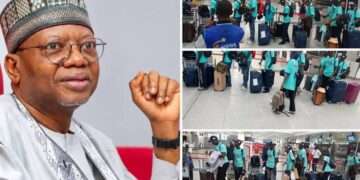
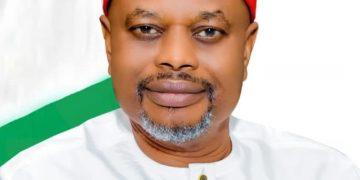
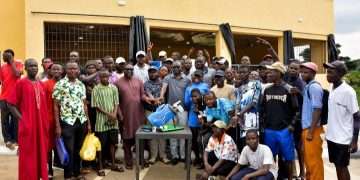
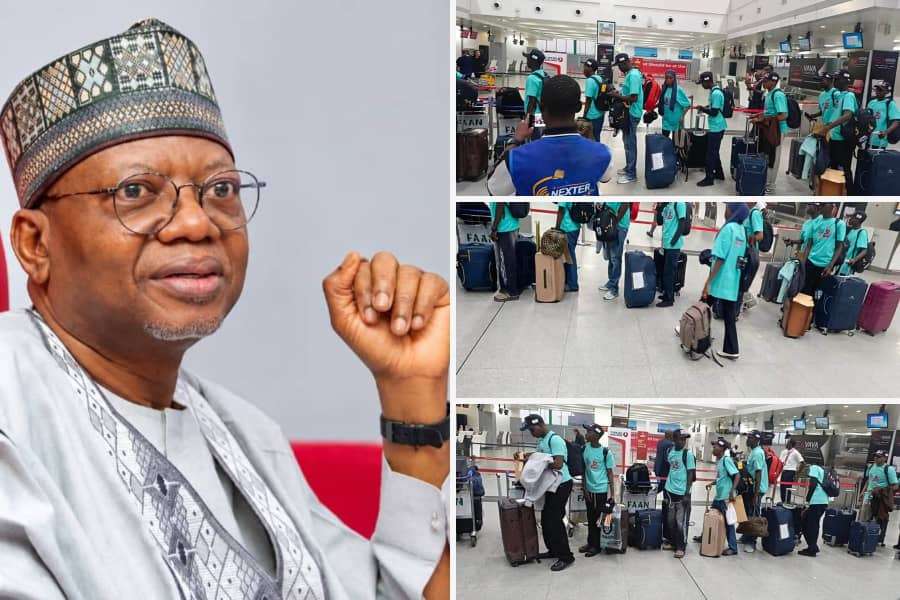
Twenty undergraduate students from Niger East Senatorial District have departed for Istanbul, Turkey, to pursue their university education under fully funded scholarships facilitated by Sen. Mohammed Sani Musa, CON.
The senator announced the development in a post on his Facebook social media handle, accompanied by photographs corroborating the students’ departure. He described the development as another milestone in his sustained commitment to educational development, youth empowerment and human capital investment across the district.
The students’ departure represents another step in the senator’s scholarship initiative aimed at expanding access to quality education, international exposure and opportunities for young people from the district.
The latest beneficiaries join 100 Niger East students currently studying in India, 50 pursuing medical education in China and another 50 undertaking academic programmes in Russia, all under fully sponsored scholarship programmes facilitated by the senator.
Preparations are also underway for the departure of another 70 undergraduate students to Morocco, while 50 postgraduate students are expected to benefit from fully funded doctoral scholarship opportunities.
The expanding scholarship programme, according to stakeholders, reflects a deliberate investment in human capital development, with education considered a critical tool for social mobility, economic advancement and sustainable community development.
The initiative is part of a broader development agenda through which Musa has sought to combine legislative representation with interventions in education, healthcare, agriculture, infrastructure, youth empowerment and skills acquisition across Niger East.
*Empowerment programme reaches over 7,000 constituents*
In a related development, the senator recently flagged off the second phase of his constituency empowerment programme, reaching more than 7,000 beneficiaries across the six local government areas of Niger East Senatorial District.
The programme, held at the Trade Fair Complex, Minna, attracted community leaders, political stakeholders, youth groups, women associations and residents, with the distribution of equipment and financial support designed to strengthen livelihoods and promote small-scale businesses.
Items distributed included deep freezers, washing machines, agricultural sprayers, fertilisers, sewing machines, vehicles, motorcycles, tricycles, water pumping machines, grinding machines, welding machines, hair dryers and barbing clippers.
Small business owners also received cash grants of N50,000 and N100,000 to support their businesses and enhance their capacity to generate income.
The distribution, organisers said, was being coordinated through established ward structures to promote transparency and ensure equitable access across the district.
For many beneficiaries, the intervention offered an opportunity to expand existing businesses, establish new ventures and improve household income amid prevailing economic challenges.
*Skills acquisition as a pathway to self-reliance*
Beyond the distribution of equipment and grants, Musa has also facilitated vocational training programmes aimed at equipping constituents with practical skills for economic independence.
Recently, 100 constituents were sponsored for intensive training in tailoring and fashion design at the Industrial Training Fund (ITF), Minna. At the end of the programme, participants received sewing machines to enable them to establish businesses and put their acquired skills to productive use.
The initiative, according to stakeholders, is designed to address unemployment, particularly among young people and women, by promoting entrepreneurship and self-employment.
Similarly, 50 youths engaged in meat processing and butchery recently completed a capacity development programme organised in partnership with the Federal Ministry of Agriculture and Food Security.
The participants were trained in modern meat processing techniques, hygiene standards and business management, and received grants, equipment and certificates to support their businesses.
*Education infrastructure and student support*
Education has also featured prominently in the senator’s constituency interventions, with projects involving the construction and rehabilitation of school infrastructure and support for students facing financial constraints.
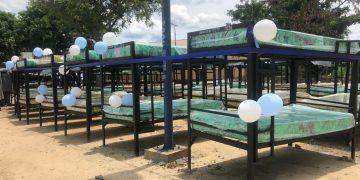
Among the ongoing projects is the construction of a hostel at Suleiman Barau Science College, Suleja, while a block of three classrooms and four toilets has been completed at Women Day Secondary School, Kagara.
The senator has also facilitated the registration of students for examinations such as WAEC, NECO and JAMB, in addition to scholarship opportunities for beneficiaries within and outside the country.
According to Senator Sani Muhammed Musa, registration for the examinations and scholarship programmes remains an ongoing initiative, with eligible constituents encouraged to take advantage of the opportunities.
The overseas scholarship scheme, which has continued to expand across several countries, is expected to provide beneficiaries with academic exposure, professional competencies and international experience that could contribute to the development of their communities upon completion of their studies.
*Expanding access to healthcare*
Healthcare delivery is another area receiving attention, with several 50-bed medical centres under construction across the district.
Projects are ongoing in Suleja, Paiko, Sarkin Pawa and Kuta, while additional facilities have been earmarked for Gawu Babangida, Kafin Koro, Makera Ward in Minna and General Hospital Suleja.
Further projects are planned for Kagara, Maikunkele, Tafa and Gwada.
The facilities, when completed, are expected to improve access to healthcare services and reduce the burden on residents of underserved communities who often travel considerable distances to obtain medical attention.
*Water, roads and sporting facilities*
In the area of water supply, a project facilitated by the senator in Garam, Tafa Local Government Area, is already operational, providing potable water to residents.
A 500,000-litre reservoir has also been completed for the Pago community to support water distribution and improve access to clean water in surrounding areas.
Road infrastructure has equally received attention, with the Tudun Wada Road project in Suleja expected to improve connectivity and ease transportation for residents.
The ongoing construction of the Minna Township Stadium and a multipurpose mini-sports complex in Paiko are also expected to provide opportunities for sports development, youth engagement and recreational activities.
*Strengthening agricultural value chains*
Recognising agriculture as a key driver of economic growth, Musa has continued to support farmers and agro-processors through training, equipment distribution and financial assistance.
In one notable intervention, 50 youths engaged in meat processing and butchery completed a capacity development programme organised in partnership with the Federal Ministry of Agriculture and Food Security.
Participants received training on modern meat processing techniques, hygiene standards and business management, alongside grants, equipment and certificates.
Beneficiaries described the programme as transformative and praised the senator for creating opportunities that could improve their incomes and strengthen local food value chains.
*Sustaining development through constituency representation*
The various interventions, spanning education, healthcare, agriculture, water supply, infrastructure, sports and economic empowerment, point to an approach to constituency representation that places tangible community development alongside legislative responsibilities.
For beneficiaries of the empowerment programme, the equipment, grants and vocational opportunities represent more than immediate relief, but a chance to build businesses, sustain families and improve their economic circumstances.
Similarly, the students departing for Turkey and other countries are expected to benefit from international academic exposure and training that could position them for future professional and leadership roles.
As more students secure overseas scholarships and more constituents benefit from empowerment and skills acquisition programmes, Niger East is witnessing a development approach that places investment in people at the centre of its long-term aspirations.
For the 20 students now headed to Istanbul, the journey marks the beginning of a new chapter. For their families and communities, it also represents an opportunity to see education translate into expanded possibilities and a brighter future.
*Emmanuel Jonathan, a Communications Expert, writes from Abuja.*