

































ABER Hails Princess Bam for Coordinating Formation of African Traditional Leaders Council
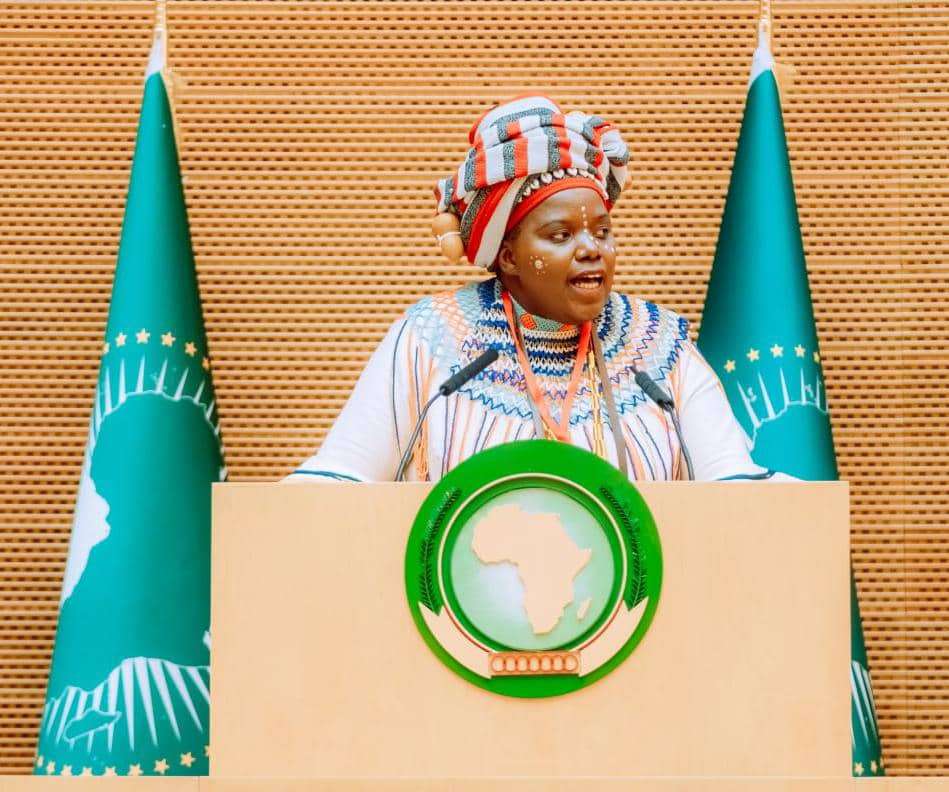
The Africa Blue Economy Roundtable (ABER) on Monday commended South Africa’s Princess Dr. Nikiwe Bam for coordinating the establishment of the African Traditional Leaders Council (ATLC) at the African Union (AU) Headquarters in Addis Ababa, Ethiopia.
ABER described Bam’s role in coordinating the Africa Celebrates Traditional Leaders Forum as a landmark contribution to Pan-African unity and the institutional recognition of traditional leadership across the continent.
The commendation was contained in a statement issued in Abuja on Monday by Hajiya Medina Dauda Nadabo, ABER’s Director of Communication and Public Affairs.
The Convener of ABER, Dr. Piriye Kiyaramo, described Princess Bam as a committed Pan-Africanist whose efforts were instrumental in bringing traditional institutions together through the Afrikan Indigenous Leaders organisation and the Africa Celebrates platform.
“Her historic feat as Global Coordinator, which culminated in the birth of the African Traditional Leaders Council at the AU Headquarters in Addis Ababa, is incredible and worthy of celebration by all Africans and the Diaspora,” Kiyaramo said.
Bam is ABER’s Special Envoy on African Traditional Institutions and the African Diaspora, Global Coordinator of the African Traditional Leaders Forum and Founder and Global President of Afrikan Indigenous Leaders.
Kiyaramo said the adoption of the Addis Ababa Declaration and establishment of the ATLC went beyond cultural recognition, describing them as significant developments for Africa’s Blue Economy.
He said traditional institutions occupied strategic positions in the management and protection of Africa’s aquatic resources, including rivers, lakes, creeks, mangroves, beaches and coastal communities.
According to him, traditional rulers are critical stakeholders in blue resource governance because of their historical custodianship of ancestral waters, fishing grounds, coastal lands and indigenous conservation practices.
He noted that traditional leaders also possessed indigenous knowledge of fishing seasons, tidal patterns, weather forecasting, boat building, mangrove preservation and conflict resolution.
Such knowledge, he said, remained valuable to climate adaptation, sustainable fisheries and effective ocean governance.
Kiyaramo further identified traditional rulers as important peacebuilders whose influence could promote stability and create an enabling environment for investments in aquaculture, eco-tourism and other maritime-related activities.
He cited cultural festivals and aquatic events such as Lake Efi in Bayelsa, Argungu, Bakassi, Pesse, Ngondo and the Confluence Regatta as examples of opportunities for promoting Africa’s cultural heritage and blue tourism.
The ABER convener also highlighted the role of Queenmothers and women traditional leaders in strengthening fisheries livelihoods, particularly in the post-harvest value chain.
He said the recognition of traditional institutions in the Blue Economy was one of the reasons ABER established the Office of the Special Envoy on African Traditional Institutions and the African Diaspora.
Kiyaramo said Bam’s appointment was intended to strengthen the connection between indigenous leadership structures and international Blue Economy diplomacy.
The Africa Celebrates Traditional Leaders Forum was held on Nov. 13, 2026, under the theme, “Strengthening Traditional Leadership for Peace, Culture and Sustainable Development Across Africa.”
The forum brought together representatives of 46 African kingdoms and members of the African Diaspora, recognised as the continent’s Sixth Region.
Participants deliberated on peacebuilding and conflict resolution, women and queenship, culture and indigenous knowledge systems, as well as traditional governance and sustainable development.
One of the major outcomes was the adoption of the Addis Ababa Declaration and the establishment of the ATLC as a continental platform for traditional authorities to contribute to the African Union’s Agenda 2063 and the African Blue Economy Strategy.
Kiyaramo, however, said the new council would require inclusive consultations, a clear charter, transparent governance and practical programmes addressing the needs of communities.
He described the forum as both a historic milestone and the beginning of a broader effort to strengthen traditional leadership’s contribution to Africa’s unity, peace and sustainable development.
He urged stakeholders to sustain the momentum through cooperation and purposeful action to ensure that traditional institutions remained relevant to the continent’s de
velopment aspirations.