
























‘Mystery’ Oil Spill Disrupts Fishing Activities in Bayelsa Coastal Community
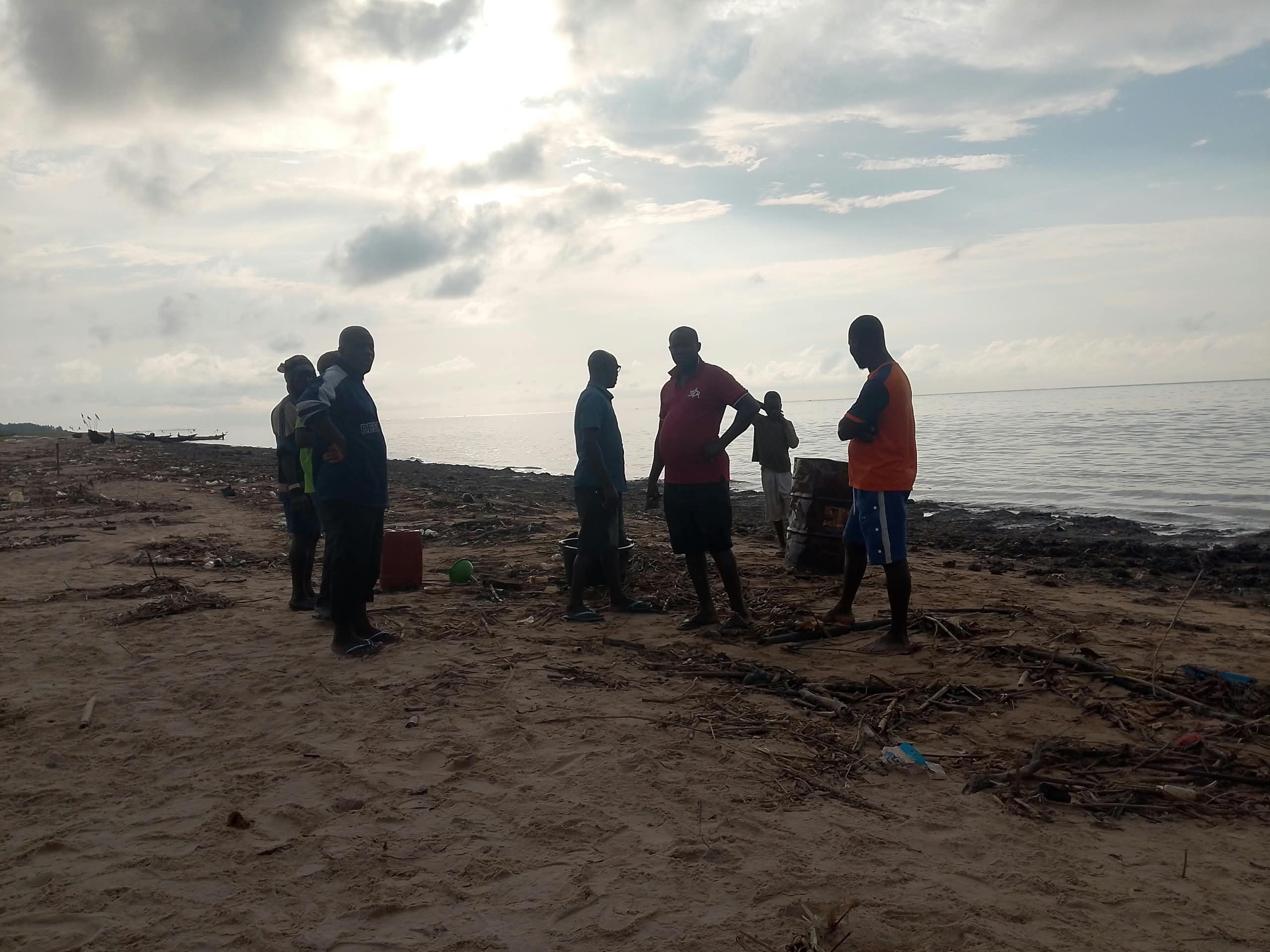
Fishing activities have been disrupted in Egweama community, Brass Local Government Area of Bayelsa State, following a crude oil spill that polluted its shoreline and adjoining waters.
The spill, which occurred on Sunday, November 1, 2026, left fishermen stranded and damaged some fishing nets, threatening the livelihoods of residents who depend largely on fishing.
Environmental Conservation Agriculture and Rural Development (ECARD) confirmed the incident in a field report released on Monday, following investigations led by its environmental activist, Alagoa Morris.
The organisation said the incident was confirmed by the Chairman of Egweama Community Development Committee (CDC), Mr Tonye Yemoleigha, and other residents.
Although the source of the spill has not been officially established, some community members have accused Aiteo of responsibility.
They alleged that vessels transporting crude oil from Nembe Creek to the Atlantic may have discharged oil into the surrounding waters.
One of the affected residents, Ms Ebimiete David, said crude oil began washing ashore between 5 p.m. and 6 p.m. on Sunday.
She explained that the volume increased around 8 p.m., when the high tide brought large quantities of crude oil to the shoreline.
According to her, residents spent the night scooping the oil into containers until about 3 a.m., when the tide receded and carried much of the oil back into the sea.
Chief Souyo Amasara Alagoa-Inengite II, a fishing camp settler, said the pollution prevented fishermen from going to sea.
He said the water surface was covered with crude oil when fishermen attempted to deploy their nets between 7 p.m. and 8 p.m. on Sunday.
Alagoa added that some fishing nets had been damaged, leaving fishermen stranded without access to their primary source of livelihood.
ECARD observed several jerrycans, drums and plastic containers filled with crude oil collected by residents along the shoreline.
Some young people were also seen transferring the recovered crude oil into containers on Monday morning.
In a statement titled, “Oil Spill: Egweama Community Cries Out for Immediate Help, Cleanup”, Yemoleigha appealed to the Bayelsa Government to urgently intervene.
He urged the government to compel the oil company or any organisation found responsible to undertake immediate remediation and cleanup of the polluted environment.
The CDC chairman also called for medical assistance and relief materials to cushion the socioeconomic effects of the incident on residents.
He said the spill had caused hardship to the community, whose people depended on the river for their livelihoods.
Meanwhile, ECARD warned that the incident highlights the persistent challenge of offshore oil spills, particularly cases where operators deny responsibility, making it difficult to identify the source of pollution.
The organisation recalled a similar incident involving Foropa community in Southern Ijaw Local Government Area in January 2024, where residents raised the alarm over an unidentified oil spill along the Atlantic coastline.
It also cited a 2021 offshore spill around Sangana in Brass and Koluama in Southern Ijaw, where Conoil was allegedly implicated.
ECARD said although the National Oil Spill Detection and Response Agency (NOSDRA) collected samples from affected locations, the results of the investigation were never made public.
The organisation stressed that scientific fingerprint analysis of crude oil samples was necessary to establish the source of offshore spills and hold responsible operators accountable.
It called on NOSDRA, the Nigerian Upstream Petroleum Regulatory Commission (NUPRC) and the Bayelsa Ministry of Environment to investigate the Egweama incident, identify its source and ensure immediate cleanup.
ECARD further urged regulatory agencies to strengthen environmental monitoring, improve funding and equip laboratories to conduct timely fingerprint analysis of crude oil samples.
It also advocated stronger collaboration among regulatory agencies, the Nigerian Maritime Administration and Safety Agency (NIMASA) and the Nigerian Navy to improve surveillance and response to offshore pollution.
The organisation maintained that oil spills should not be allowed to deprive fishing communities of their livelihoods, health and rig
ht to a clean environment.