
































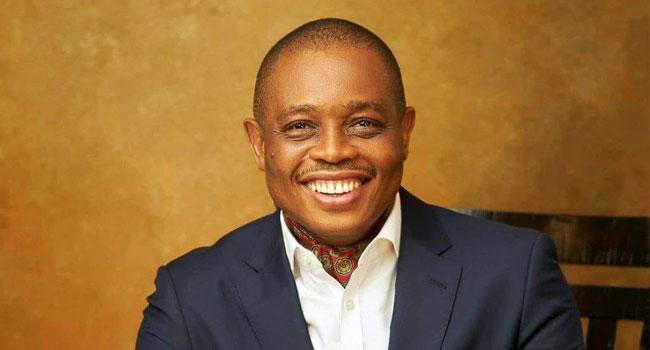
Osigwe, SAN
Ben Ndu
The President of Nigeria Bar Association (NBA), Mazi Afam Osigwe, SAN, has decried the perceived high level corruption in the Nigerian Judicial system, describing it as a social malaise.
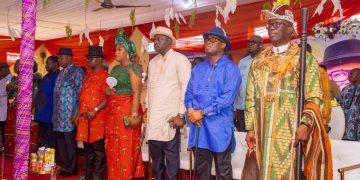
He said this at the 17th Memorial Lecture of Ralph Opara organised by the National Association of Seadogs (NAS), on Friday in Enugu.
Delivering a lecture on the theme: “Corruption in Nigeria: A Menace To Democracy And Social Justice, ” Osigwe said that Judicial corruption was a significant social malaise in Nigeria, affecting the judiciary, governance, and economic development.
He said that the topic was most apposite because many Nigerians have steadily lost confidence in the judicial system, as it has been widely perceived as being riddled with corruption, inconsistency, and undue influence.
“It erodes public trust in the legal system, leading to a culture of impunity and disillusionment among citizens, ” he said.
The judiciary, he said, which ought to be the last hope of the common person, is increasingly seen as an arena where justice can be delayed, manipulated, or outrightly purchased by the highest bidder.
Osigwe stated that the perception was rooted in repeated instances and patterns of judicial misconduct that have played out in the public eye.
According to him, corruption hurts the poor disproportionately by diverting funds intended for development; undermining the government’s ability to provide basic services; feeding inequality and injustice and discouraging foreign aid and investment.
He described corruption as a key element in economic underper-formance and a major obstacle to poverty alleviation and development.
He said: “Corruption remains one of the most persistent obstacles to economic growth, democratic governance, and social development globally.
“The World Bank in its paper Helping Countries Combat Corruption (World Bank 2000), has identified corruption as “the single greatest obstacle to economic and social development.”
“It is a national malaise that must be tackled by the Government of the Federal Republic.
“The disastrous consequences of the evil practice of corruption have taken this nation into the list of the most corrupt nations on earth.
The legal icon said that corruption was more harmful to the society than a man who runs amok with a dagger in a crowded street.
According to the NBA president, corruption deliberately destroys the moral foundation of society and causes incalculable distress to individuals while still answering “honourable”.
Osigwe said that judicial corruption in Nigeria remained a pervasive issue, undermining public trust in the legal system and hindering the administration of justice.
“It manifests in forms such as bribery, political interference, nepotism, and manipulation of court processes, often involving judges, lawyers, court staff, and litigants.
“Whatever form it takes, judicial corruption strikes at the very heart of the rule of law, ” he said.
According to him: “When justice becomes a commodity traded in the shadows of chambers and corridors; when rulings are allegedly influenced by envelopes rather than evidence; when adjournments are engineered for personal gain rather than procedural necessity; then the judiciary ceases to be the last hope of the common man and becomes instead the first refuge of the powerful and the corrupt.
“Judicial corruption in Nigeria not only persists but, in the view of many, has become even more entrenched.
“Despite passage of time and the repeated calls for reform, the integrity of our judicial system continues to be undermined by practices that erode public confidence and betray the very principles we are sworn to uphold.”
Osigwe said that the judiciary was not an ivory tower immune from the gaze of the people, rather it is an institution that must constantly earn public trust through fairness, timeliness, and transparency.
He said no judiciary can command respect if questions persist about the discipline and integrity of its officers.
The National Judicial Council (NJC) must be unwavering in upholding ethical standards, while at the same time protecting judicial independence from political interference.
“Whenever the course of justice is perverted or judgments are corruptly obtained, it assaults social justice by striking most cruelly at the poor and the vulnerable.
“The poor farmer whose land is grabbed by the influential; the widow denied her inheritance; the victim of police brutality seeking redress; these are the voiceless who suffer most when justice tilts toward money and connections.
“When justice is delayed, manipulated, or denied due to corrupt practices, the rule of law becomes an illusion.
“Fundamental rights lose meaning, contracts become uncertain, and lawful enterprise is discouraged, ” he said.
He added that social justice cannot flourish where access to justice is determined by influence rather than merit.
According to him, in such circumstances, the law ceases to be a shield for the weak and becomes a weapon for the strong.
Osigwe said that a compromised judiciary, therefore, does not merely delay justice; it denies it, perpetuating inequality and breeding resentment that can erupt into unrest.
“The fight against judicial corruption in Nigeria cannot be won without the active, principled, and collective commitment of lawyers, judges, and the citizens of Nigeria, who occupy central positions in the administration of justice.
“It is only through a shared commitment to integrity that the legal profession can dismantle entrenched corrupt practices, restore public trust, and ensure that justice in Nigeria is administered fairly, impartially, and in accordance with the rule of law.
“It is imperative that the Judiciary upholds the Code of Conduct for Judicial Officers with unwavering fidelity.
“You must reject every inducement, no matter how subtle or disguised, and report misconduct, whether by colleagues, court staff, or lawyers, swiftly and fearlessly to the National Judicial Council (NJC).
The Senior Advocate of Nigeria said Judicial officers must embrace transparency and resist external pressures, whether political, familial, or financial, “while taking cognizance of the fact that your independence is not a privilege but a public trust. “
However, he said for the Judiciary to play its role in the fight against corruption it must be independent and free from any form of interference or influence in terms of funding, political manipulation e.t.c.
“This will enable Judges to determine cases freely and competently based on facts presented before them and nothing more, ” he said.
He said that the Courts must ensure that cases bordering on corruption were dealt with expeditiously to instil public confidence in the fight against corruption.
He said: “To this end, the court must ensure that recourse to unnecessary technicalities are avoided or out-rightly rejected. “
Osigwe said that the fight against corruption would be more effective when Judges are properly trained, better motivated, disciplined and committed to duty.
“The need for Judges to be better trained to handle (corruption) cases cannot be over-emphasised.
He said that active citizen engagement was also essential to safeguarding the integrity of the justice system.
“Citizens must refuse to participate in corrupt practices.
“Judicial corruption often thrives through everyday interactions, which include offers of bribes to influence outcomes, the use of intermediaries to “fix” cases, or the expectation that justice must be paid for.
“By rejecting these practices, even when they appear expedient, you and I can help to dismantle the demand side of corruption and affirm that justice should be based on merit and the rule of law, ” he said.
He stressed the need for judicial reforms to demand transparency in judicial appointments and disciplinary proceedings, and holding elected officials accountable for strengthening the justice sector.
According to him, these are critical ways citizens could influence long-term change.
“An informed and engaged electorate is a powerful check against institutional decay, ” he said.
He said to improve judicial professionalism, the issue of judicial appointments must be addressed.
“To help improve the professionalism of judges, the use of a state-by-state judicial academy whose mission would be to select new judges and train them should be considered, ” Osigwe said.
He said that towards improving the judicial system the Nigeria Bar Association (NBA) had made some recommendations for the reform of the existing laws especially on the training of Judges
“The training modules for judges should be developed for use in training smaller number of judges within their respective states.
“Judicial appointments process should be reformed to focus on skill professional and technical ability, in addition to integrity and personality.
“The Federal and State governments should ensure that the constitutional financial autonomy given to the judiciary is given effect so as to avoid such adverse effects, ” he said.
Osigwe said that combating judicial corruption was essential for restoring public faith in the legal framework and ensuring a fair and equitable justice.
According to him, religious organisations and traditional institutions also have a crucial role to play through carrying out and sustaining rigorous public enlightenment campaign against economic and financial crimes within and outside Nigeria.
“They should neither give a place of honour to individuals whose wealth are of doubtful origin nor confer them with titles.
“They should speak out and condemn corruption and corrupt practices.
“They should not celebrate those who have plundered our national resource; they must ensure that they are given a place of dishonour in their organisations or institutions, ” he said.
He urged traditional institutions and religious organisations to declare zero tolerance for corruption.
“This fight must continue relentlessly, transparently, and without compromise.
“Judicial corruption is not merely a legal problem; it is a moral crisis and a democratic emergency, ” the NBA president said.