































By Ikechukwu Emmanuel
Chief Uche Geoffrey Nnaji, Honourable Minister of Innovation, Science and Technology, has lauded President Bola Ahmed Tinubu, GCFR, for steering Nigeria into an era of science-driven, innovation-led development over the past two years.
In a statement signed by his Senior Special Adviser (Administration), Dr. Robert Ngwu, the Minister described the Tinubu administration as a “powerhouse of progress”—achieving landmark gains in energy, digital innovation, healthcare, security, agriculture, and job creation.
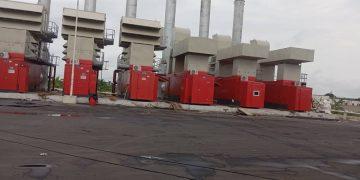
One of the flagship achievements is the nationwide Renewed Hope Solarisation Project—President Tinubu’s unique energy gift to Nigeria’s tertiary institutions and federal teaching hospitals. For the first time in the country’s history, each of the 36 states and the FCT will receive a 2MW solar hybrid power system targeted at one Federal University and one Federal Teaching Hospital per state.
“This pilot phase provides reliable, eco-friendly electricity to institutions long plagued by erratic power and astronomical utility bills. It is a light of hope and a foundation for further rollout across all institutions.’’
The Ministry is also driving the Sustainable Energy Access Project (SEAP)—a transformative initiative targeting clean cooking and hybrid energy access across all 774 local governments. Full implementation is expected to create nearly one million jobs, especially for youth, women, and artisans—reinforcing the Renewed Hope Agenda’s focus on inclusive energy and employment.
In another historic stride, President Tinubu approved the launch of four new satellites—NigeriaSat-3, Sat-4, Sat-5, and NigeriaSAR-1—under the leadership of NASRDA. The new satellite constellation enhances national sovereignty, disaster response, border surveillance, agriculture, and land administration.
Through the Global Cleantech Innovation Programme (GCIP), Nigeria validated its first National Cleantech Innovation Policy—accelerating green industrialization and economic diversification. This visionary framework is set to create over 500,000 direct and indirect jobs across agritech, green energy, circular economy, and smart manufacturing.
Nnaji emphasized that women and youth are at the center of the GCIP policy with ringfenced funding, training platforms, and national mentorship schemes targeting female-led businesses and youth startups.
To strengthen local production and reduce Nigeria’s reliance on raw exports, the Ministry also proposed a 30% minimum value-addition bill. This bold legislation is a game-changer for industrial growth and manufacturing job creation.
Reviving the cassava value chain is another priority, with mechanized production lines for garri, starch, and flour. Similarly, a Green and Blue Methanol Industrial Complex, valued at €7.9 billion, is set to deliver low-carbon fuels—positioning Nigeria as a continental clean energy leader.
The Minister also celebrated Nigeria’s co-leadership role in global innovation, particularly through Commonwealth platforms in AI, climate-smart agriculture, and indigenous knowledge systems.
Research and industrial achievements also include development of a wide range of machines—crushers, mixers, ovens, stoves, dryers—replacing manual agro-processing and reducing post-harvest losses. The Ministry has completed semi-automated, fully mechanized production systems for palm oil, cassava, plantain, soybeans, and vegetable oil.
Notably, Nigeria’s first Artemisinin Extraction Plant has been developed and field-tested. This plant extracts API from domesticated Artemisia annua, a game-changer for Nigeria’s fight against malaria. With over 200,000 deaths and billions spent annually, this innovation drastically cuts treatment costs and strengthens pharmaceutical sovereignty.
The GCIP initiative further empowers Nigerian researchers through a National Research and Innovation Fund (NRIF) that offers tax incentives and commercialization support. Nigeria is on track to generate 20+ cleantech patents annually.
President Tinubu has established an Inter-Ministerial Committee chaired by the Vice President to align innovation goals across ministries. Supported by NBS and NITDA, Nigeria now tracks jobs, emissions reduction, and gender participation through real-time data systems.
He said another key presidential achievement was National Cleantech Innovation Programme (GCIP Nigeria) in advancing Nigeria’s Green Industrial Revolution.
“Under the strategic direction of Tinubu, the ministry has spearheaded the formulation and validation of Nigeria’s first National Cleantech Innovation Policy—a groundbreaking framework designed to fast-track Nigeria’s green industrialisation, economic diversification, and climate resilience.’’
According to him, the full implementation of the GCIP Cleantech policy is projected to create more than 500,000 direct and indirect jobs, particularly in clean energy, agritech, smart manufacturing, green transportation, and circular economy sectors.
“Special focus is placed on women, youth, and persons with disabilities—ensuring inclusive participation in Nigeria’s climate-smart innovation ecosystem.’’
He said that millstone was boosting international partnerships and investments.
According to him, president Tinubu’s strategic foreign policy thrust has unlocked new partnerships with the UNDP, UNESCO, Commonwealth Secretariat, and AfDB.
“Thank you Mr. President…From satellite skies to solar campuses, and from mechanized farms to biotech labs—Nigeria is rising, and it is powered by innovation,” Nnaji concluded.