
























By CHIGOZIE EJIOGU
What began as a policy discussion in Abuja has exposed a deeper fracture within the South’s traditional leadership — a dispute that now raises urgent questions about representation, authority, and the flow of federal influence.
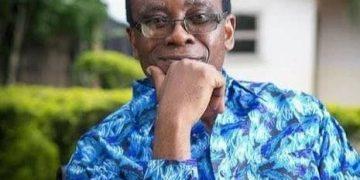
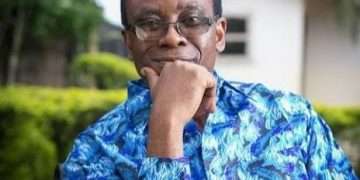
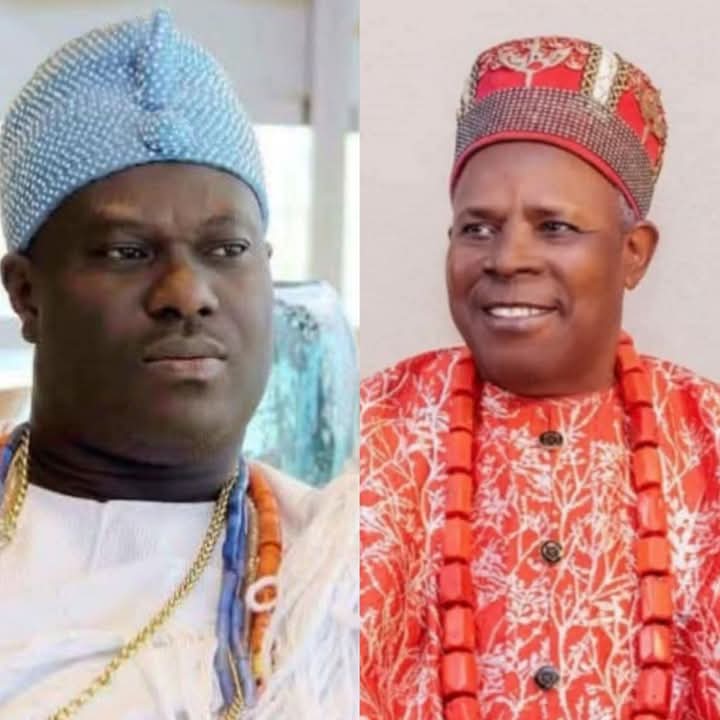
At the National Traditional and Religious Leaders Summit on Health, attended by President Bola Ahmed Tinubu, the Ogbunechendo of Ezema Olo Kingdom, Igwe Lawrence Agubuzu, delivered a blunt warning: the much-talked-about Southern Traditional Rulers’ Council, he said, does not exist in any legitimate or representative form.
According to the Enugu monarch, any recognition — especially financial — given to individuals claiming to speak for a unified southern council risks empowering voices without a mandate.
His message was clear and unambiguous: The South is not structured like the North. Authority, he argued, must come from the people and their established regional systems. Any attempt to centralise representation under a loose umbrella risks misrepresentation and political manipulation.
More pointedly, he urged the Federal Government to engage regions directly — particularly the South-East — rather than through intermediaries whose legitimacy remains contested.
The intervention immediately drew a response from the Ooni of Ife, Oba Adeyeye Ogunwusi, who took a markedly different position.
The Ooni acknowledged that membership in the Southern Traditional Rulers’ Council is voluntary, but insisted the body is real, active, and influential. He described it as a growing platform that brings together monarchs from across the South-West, South-East, and South-South — not a regional power grab, but a collaborative structure.
His tone suggested concern over the optics of public disagreement.
The Ooni cautioned against narratives that project division, stressing that the council’s intention is unity and coordinated engagement with government. He also reaffirmed the council’s support for President Tinubu and urged the public to rely on verified information rather than speculation.
Adding another layer to the controversy, Eze Aro of Arochukwu, Eberechukwu Oji, who serves as publicity secretary for the council, stated that the body is not only operational but formally recognised by the Federal Government. He noted that the President personally attended its inauguration in Owerri — a claim that, if uncontested, strengthens the council’s institutional standing.
What This Really Means
This is more than a disagreement over structure.
It exposes three critical fault lines:
Representation Crisis
Who truly speaks for the South — regional councils, individual state traditional institutions, or a centralised southern body?
Control of Federal Access
Recognition determines who receives government engagement, influence, and potentially funding.
South’s Internal Fragmentation
Public disagreement among top monarchs weakens the South’s negotiating power at a time when regional cohesion is politically valuable.
Igwe Agubuzu’s position reflects a deeper anxiety within parts of the South-East: that decisions affecting the region could be filtered through structures where their voice is diluted.
The Ooni’s stance, on the other hand, reflects a strategic push for collective southern influence — even if consensus remains incomplete.
The Shocking Development
The most consequential revelation is not the disagreement itself — but that the Federal Government may already be working with a body whose legitimacy is openly disputed by some of the very rulers it claims to represent.
If the divide deepens, the South risks speaking with multiple, competing voices — a scenario that weakens both traditional authority and regional bargaining power.
For an institution built on heritage, legitimacy, and moral authority, public fragmentation may prove more damaging than any political exclusion.
The question now is no longer whether the Southern Traditional Rulers’ Council exists.
The real question is: Who, if anyone, truly speaks for the South?


Southern Thrones Clash: Enugu Monarch, Agubuzu Challenges Council’s Legitimacy


Popular News
-

UNIPORT begins academic review, targets higher global ranking – VC
-
CEMTV launches broadcast operations in Rivers
-
Pirate Confraternity provide free healthcare to 500 in Rivers
-
Naval Outpost Commission’s New Duty Cabin,Reinforced Civil-Military Ties
-
300 schoolgirls begin AI, data training to bridge gender tech gap