

































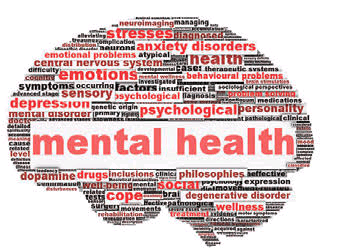
Mental health is an integral and essential component of health. It is a state of complete physical, mental and social well-being and not merely the absence of disease or infirmity.” An important implication of this definition is that mental health is more than just the absence of mental disorders or disabilities. It may also be defined as a state of well-being in which an individual realizes his or her own abilities, can cope with the normal stresses of life, can work productively and is able to make a contribution to his or her community.
Mental health is fundamental to our collective and individual ability as humans to think, emote, interact with each other, earn a living and enjoy life.
On this basis, the promotion, protection and restoration of mental health can be regarded as a vital concern of individuals, communities and societies throughout the world.
Determinants of mental health
Multiple social, psychological, and biological factors determine the level of mental health of a person at any point of time. For example, violence and persistent socio-economic pressures are recognized risks to mental health. The clearest evidence is associated with sexual violence.
Poor mental health is also associated with rapid social change, stressful work conditions, gender discrimination, social exclusion, unhealthy lifestyle, physical ill-health and human rights violations.There are specific psychological and personality factors that make people vulnerable to mental health problems. Biological risks include genetic factors.An environment that respects and protects basic civil, political, socio-economic and cultural rights is fundamental to mental health. Without the security and freedom provided by these rights, it is difficult to maintain a high level of mental health.National mental health policies should be concerned both with mental disorders and, with broader issues that promote mental health.
Specific ways to promote mental health include:early childhood interventions (e.g. providing a stable environment that is sensitive to children’s health and nutritional needs, with protection from threats, opportunities for early learning, and interactions that are responsive, emotionally supportive and developmentally stimulating);support to children (e.g. life skills programmes, child and youth development programmes);socio-economic empowerment of women (e.g. improving access to education and microcredit schemes);social support for elderly populations (e.g. befriending initiatives, community and day centres for the aged);programmes targeted at vulnerable people, including minorities, indigenous people, migrants and people affected by conflicts and disasters (e.g. psycho-social interventions after disasters);mental health promotional activities in schools (e.g. programmes involving supportive ecological changes in schools);mental health interventions at work (e.g. stress prevention programmes);housing policies (e.g. housing improvement);·violence prevention programmes (e.g. reducing availability of alcohol and access to arms);community development programmes (e.g. integrated rural development);poverty reduction and social protection for the poor;anti-discrimination laws and campaigns;promotion of the rights, opportunities and care of individuals with mental disorders.
Knowledge of what to do about the escalating burden of mental disorders has improved substantially over the past decade. There is a growing body of evidence demonstrating both the efficacy and cost-effectiveness of key interventions for priority mental disorders in countries at different levels of economic development.
Examples of interventions that are cost-effective, feasible, and affordable include:treatment of depression with psychological treatment and, for moderate to severe cases, antidepressant medicines;treatment of psychosis with antipsychotic medicines and psychosocial support;taxation of alcoholic beverages and restriction of their availability and marketing.
Mental health is everything and should be put on check always.