



































A season broken up by the World Cup
There are 16 rounds of games crammed in before players jet off for the World Cup in Qatar after Sunday, Nov. 13. Teams are back in Premier League action on Monday, Dec. 26 — just eight days after the World Cup final on Sunday, Dec. 18.
But that doesn’t tell the whole story. The Carabao Cup quarterfinals are due to take place on Tuesday, Dec. 20 and Wednesday, Dec. 21. Football really won’t stop this season. Oh, and guess what? Clubs have permission to play friendlies while the World Cup is on — as long as scheduling doesn’t conflict with the tournament.
At least there is only one usual international break, at the end of September when the UEFA Nation League group stage completes, and only club football will be played in October.
More rest for teams in a packed schedule
Premier League managers have always complained about the amount of time their stars get off, and changes have been made to help with player welfare. Clubs that are away in the Champions League on a Wednesday evening will not be selected for television coverage in the 12.30 p.m. U.K. slot on a Saturday. If they already have been and there is a clash when the UCL fixtures come out, their Premier League game will be switched to the Saturday night.
Also, no club will now be expected to play twice in a 48-hour period during the packed Christmas schedule. This often caused annoyance with some clubs getting far more rest over the festive period than others. So while the Christmas fixtures are set as Dec. 26, Dec. 31 and Jan. 2, in reality the games will be spread right across that period and into the first week of January to optimise rest.
Multiball system to cut down on time-wasting
Time-wasting on goal-kicks, free kicks and throw-ins seems to be an increasing problem, and last season the ball was in play for an average of 55.07 minutes across Premier League games.
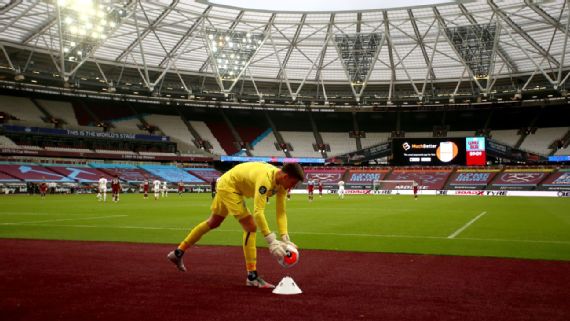
In an attempt to improve that, the multiball system (as used after the COVID-19 restart when games were behind closed doors) will be re-introduced across all matches. Ten match balls will be used — one on the pitch, one with the fourth official and eight positioned upon cones around the perimeter of the pitch alongside a ball assistant.
It should mean the ball is returned into play more quickly, while referees have been instructed to make sure there is limited delay to a restart and issue yellow cards if necessary. If the ball assistants are abusing it in favour of the home team, the referee has the authority to scrap it and return to the one-ball system.
Teams can now use five substitutes
Next is another throw-back to the COVID-19 restart, for the Premier League at least, with clubs now able to use a maximum of five substitutions in a game — falling into line with the rest of the Big Five leagues and UEFA competitions.
English football adopted five substitutes at the end of the 2019-20 season, played in June and July, when the IFAB, football’s lawmaker, introduced it as a temporary measure. This remained in place for the next two seasons, but Premier League clubs repeatedly voted against keeping it. But earlier this year, after the IFAB made it a permanent law change, English football finally relented and voted in five subs.
Concussion subs remain in place for this season as part of a trial period.
🗣️: “The Premier League has to save their top class players as well.”
Jurgen Klopp has repeated his call for Premier League clubs to be able to use five substitutes, amid Liverpool’s busy fixture schedule. pic.twitter.com/MeCYXtvaaX— Sky Sports News (@SkySportsNews) March 7, 2022
The subtle change to offside
It’s the law change that the IFAB insists isn’t a law change. Remember Kylian Mbappe’s controversial winning goal in the final of last year’s UEFA Nations League? The France striker was in an offside position when Spain’s Eric Garcia tried to intercept a pass, but he only got a slight touch on the ball and Mbappe ran through to score. The goal counted because Garcia was deemed to have “deliberately played” the ball. After the game, UEFA’s head of refereeing called for a reworking of the law to stop such goals from counting.
Then there’s the penalty Harry Kane won and scored for England in Germany in June. He was offside when Jack Grealish attempted to thread a ball through to Raheem Sterling, but defender Lukas Klostermann deflected it through to Kane, who was brought down.
Games will no longer stop medical issues in the crowd
Every ground has always had a doctor on-site to attend to any incidents away from the pitch, such as a supporter being taken ill, and until recently they would fulfil this duty without most people knowing anything had happened.
However, in the past couple of years matches, have been stopped, with players beckoning over club physios and medical staff to help attend to a fan. It’s caused lengthy delays to some games as backroom staff are taken away from the game, which shouldn’t be necessary with a stadium doctor in attendance. All players have now been told they should not halt a game, and medical emergencies aren’t the responsibility of the team staff.