





























Environmentalist Bassey calls for post-extractivist future, community control of energy
Environmentalist Dr Nnimmo Bassey has called for a transition from extractive systems to community-led models that promote ecological integrity, justice and shared stewardship.
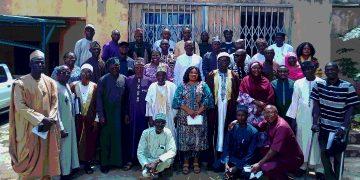
Bassey, a renowned environmental crusade who holds a national honour of Member of Order of Federal Republic made the call in his address at the School of Ecology on Commons, Care and Community Energy Sovereignty held in Lagos.
He said current socio-ecological crises were largely rooted in humanity’s disconnection from nature and communal responsibility.
According to him, exploitative systems have reinforced the commodification of nature while weakening communities and degrading their environments.
Bassey said Nigeria and other African countries remained trapped in a colonial extractivist model that prioritised foreign exchange over environmental protection and community welfare.
He said the model had enabled the expansion of fossil fuel and critical mineral frontiers through land enclosure and displacement of communities.
The environmentalist said such practices also promoted the privatisation of land and water, concentration of decision-making and commodification of nature.
He said recent wisdom gatherings across Africa, Southeast Asia and Latin America examined pathways to ecological justice, focusing on commons, care and community energy sovereignty.
Bassey said the gatherings drew on knowledge embedded in indigenous languages and customs to develop more egalitarian and stewardship-based systems.
He said a genuine socio-ecological transition must pursue justice, movement building and recovery of popular power.
“The question is who governs life, land and livelihoods, and on whose terms,” he said.
Bassey warned that without commons-based governance, the energy transition could merely replace one form of extraction with another.
He questioned whether the transition was moving society from oil wells to lithium mines and from pipelines to massive energy infrastructure.
He also questioned whether changing energy sources without altering ownership and decision-making structures could constitute a genuine transition.
“If communities remain displaced, if land remains enclosed, if water remains commodified, and if people remain excluded from decisions, can we truly call that a transition?” he asked.
Bassey said the crisis was not merely about energy but also about humanity’s relationship with land, water, forests, minerals and communities.
He said the commons demonstrated that collective life had historically depended on systems of sharing, care, governance and protection beyond market mechanisms.
“When these relationships are broken, something greater than ownership is lost. We lose memory, knowledge and the ability to decide together,” he said.
Bassey said communities that lost control over the conditions of their survival became vulnerable to destructive extraction.
He called for an energy transition in which communities participate in deciding how energy is produced, distributed and used.
The environmentalist said the required transition must move society from extraction to regeneration, enclosure to shared stewardship and concentrated power to democratic control.
He said it should also promote regenerative economies, agroecology, reparative justice and equitable redistribution of power.
Bassey expressed hope that cooperation and solidarity would replace competition and destruction in building what he described as a post-extractivist future.


Environmentalist Bassey calls for post-extractivist future, community control of energy



Popular News
-

UNIPORT begins academic review, targets higher global ranking – VC
-
CEMTV launches broadcast operations in Rivers
-
Pirate Confraternity provide free healthcare to 500 in Rivers
-
Naval Outpost Commission’s New Duty Cabin,Reinforced Civil-Military Ties
-
300 schoolgirls begin AI, data training to bridge gender tech gap