




























Civil Society Action Coalition on Education for All ( CSACEFA) has commenced implementation of early child learning advancement programme (E-Clap) in support to primary education in Abia State.
The Coordinator for Abia State and South East region Mrs. Eunice Egbuna disclosed this to the News Agency of Nigeria (NAN) in Aba on Tuesday,.
According to her, the programme is sponsored by Sterling bank, through their Education Support outlet, Sterling One Foundation ( SOF) engaged CSACEFA to implement their SOF E-CLAP in Abia.
Mrs Egbuna said that, there will be eight Months training at Umuola Central School, Aba and that the project will start from May and end in December 2024.
She said early Child Learning Advancement Programme is focused on the education of children in their first three years in the primary school (Basic 1-3).
According to her, the programme emphasises the use of the mother tongue in educating the young ones, with the belief that it helps to impact lasting knowledge on them and help them to learn faster.
In addition, “it focuses on employment of new techniques, well tailored technology , application of non formal education curriculum and innovative resources materials in the teaching and learning of literacy and numeracy.
“The programme also promotes safe space application in the teaching and learning environments as well as recourse to the rights of the learner,”the coordinator said.
The coordinator said that such will be more beneficial to children at the rural areas and conflict prone environments who are always behind academically for lack of exposure and concentration.
“It is an obvious fact that children in the rural areas and in conflict prone environments do not measure up academically for lack of exposure and concentration.
“Because of that, their first three years in the primary school is punctuated by a lot of struggles to adjust to new environment, which often lead to lack of concentration and difficulty in learning.
“This Programme , therefore, aims at injecting the use of technologies such as audio visual materials, non formal education curriculum and other innovative.
“Also injection of resource materials to sustain their interest and improve their learning ability in literacy and numeracy,”Egbuna said.
The coordinator said, it is expected that, by the end of the whole exercise, a good number of beneficiaries will have been imparted to the level of being able to show mastery of reading and writing.
“They will all do better in calculations within their scope in basic four to six and to achieve all these, teachers of the early grade pupils will be trained to adapt to this new trend.
“They will be monitored after the training, to access how well or otherwise they are doing in application of the learning as the pupils’ learning outcome will also be monitored,”she said.
Egbuna said that Umuola Central School, Aba had been chosen as the Pilot School and that the project will last for eight Months, from May to December,2024.
She pointed out that the outcome of the project will determine its extension to the entire schools in Abia.
She recall, the first phase of the project was an advocacy visit to Abia State Universal Basic Education Board (ASUBEB), where CSACEFA representatives introduced the Programme packages to the Executive Secretary and Directors.
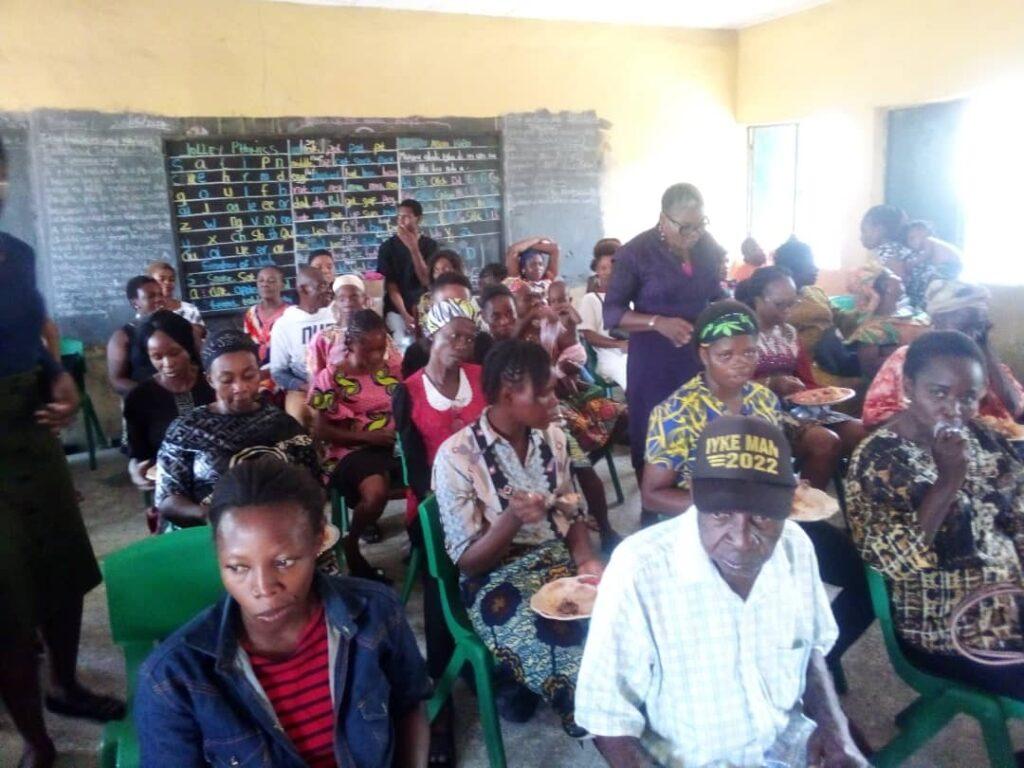
“The second activity took place in Umuola Central School where CSACEFA team led by the state Coordinator hosted over 70 parents of the early grade children of the school.
“They were sensitised on the essence of the use of Native Language ( Igbo) in raising their children for better language acquisition and better understanding during teaching and learning in the school environment.
“Also notified them of new learning technology and the juxtaposition of formal and non formal curriculum in the school.
This aims at helping the children to start early to develop interest in skills of their choice,”Egbuna said.
Finally, the parents were enjoined by the various speakers Mrs Egbuna, Mr Godson Ibekwe-Umelo and Miss Chika Egbuna to support and encourage their children by keeping a peaceful homes.
Where their children will enjoy free space to practice and revise whatever they have been taught.
Parents were advised to befriend their children and make them happy because an unhappy child hardly learns for lack of concentration.
The programme was an interactive one as many parents spoke in support of the Programme..