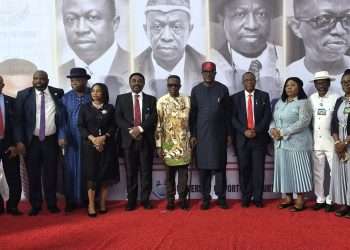








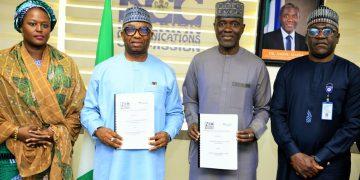



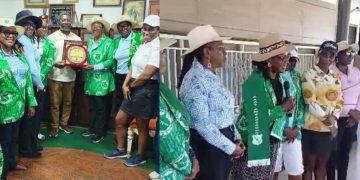



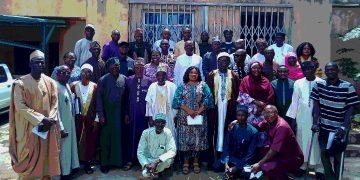
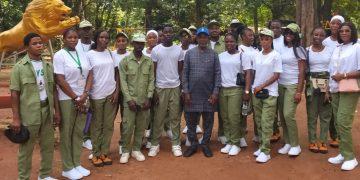
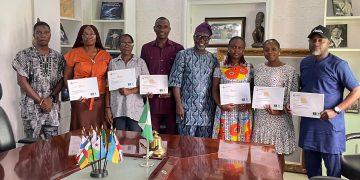

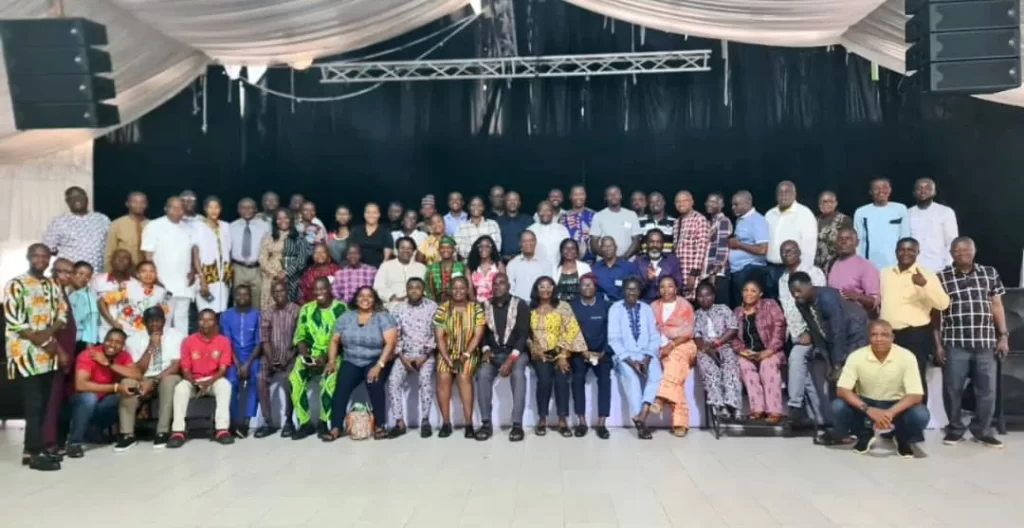
Participants at the training
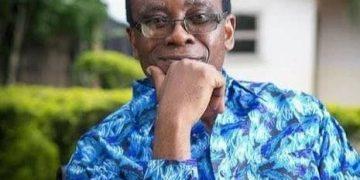
Jide Johnson, Director, Special Programmes, at the Nigerian Institute of Journalism (NIJ), Lagos says that lack of recreational facilities in schools, especially Primary and Secondary Schools in Nigeria amounts to violation of children’s rights.
Johnson stated this in his lecture on child rights delivered at a Journalism training on ethical reporting and child rights organised by the Federal Ministry of Information and Orientation, in collaboration with the United Nations Children Education Fund (UNICEF) in Port Harcourt, Rivers State.
According to him, it was the right of school children to exercise and associate with their peers while in school, in addition to their education.
He lamented that, apart from exercising, children have been denied the opportunity to chose their carriers in sports early in their development.
“When we were growing up in the 70s and 80s, we were exposed to different types of recreations, especially in the primary and secondary schools.
“But today, a building that is not up to a classroom in our days is used either, as a primary or secondary school without recourse to the recreational facilities for the children.
“This is bad and unfair to the Nigerian children. Lack of recreational facilities in our schools drastically impede the growth and development of a child.
“It is a denial to children’s rights, ” he said.
The media guru urged governments at all levels to return to the drawing board by looking into the current trend where Nigerian children were denied their rights of physical and mental development by shylock education investors.
Johnson added that children’s rights were not a privilege by any body or government but a fundamental inheritance of the child.
“Nobody should deny them their rights in accordance with the Convention on Children’s Right as put in place by the United Nations, ” he said.
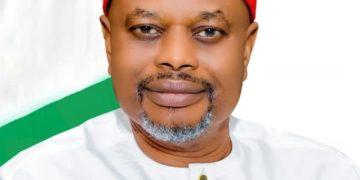
Speaking at the two-day training, the Permanent Secretary, Federal Ministry of Information and National Orientation, Mr. Ogbodo Chinasa Nnam said the training brought together, Journalists, media practitioners, and advocates who play a vital role in shaping public understanding; influencing attitudes; and protecting the most vulnerable members of our society — our children.
Represented by the Assistant Director/Head, Child Rights Information Bureau (CRIB) in the ministry, Mr Falayi Temitoye, the permanent secretary stated that,
the media holds immense power including, the power to inform, to inspire, and to hold institutions accountable.
“But with that power comes a profound responsibility: to report with integrity, sensitivity, and respect for human dignity.
“When it comes to stories involving children, that responsibility becomes even greater.
“Every image, every word, and every frame we publish can have lasting consequences on a child’s life, safety, and future, ” he said.
Ogbodo said that the training was designed to help participants to reflect on their ethical obligations as journalists; explore best practices for reporting on children’s issues; and to strengthening the understanding of child rights as enshrined in national laws and international conventions.
“Through open discussions, case studies, and shared experiences, we aim to build a media culture that protects children’s identities; amplify their voices responsibly; and upholds the highest ethical standards, ” Ogbodo said.
The training brought together Journalists from both the electronic and print medium from South East, North Central and South South of Nigeria.
The UNICEF Country Representative, Wafaa Saeed said the media had the power to amplify the children’s voices highlighting their struggles and to brining to the attention issues that affect their well-being.
Saeed described the workshop as very vital due to the critical role journalists played in shaping public perception and influencing the well-being of children in the country.
Represented by the Chief of Porthacourt Field Office, Dr Anslem Audu, Saeed noted that ethical reporting builds trust and heals division.
According to her , in a nation or society with diverse ethnicities, religions, and perspectives, the media is the glue that can hold people together, or the wedge that can drive them apart.
“Ethical reporting protects the Vulnerable, especially Children.
“This is a point close to my heart and the work of our organization, UNICEF.
“Children are not miniature adults, they are vulnerable, their minds are impressionable, and their futures are shaped by how we represent them, ” Saeed said.